Simplex X-L 35mm Projector
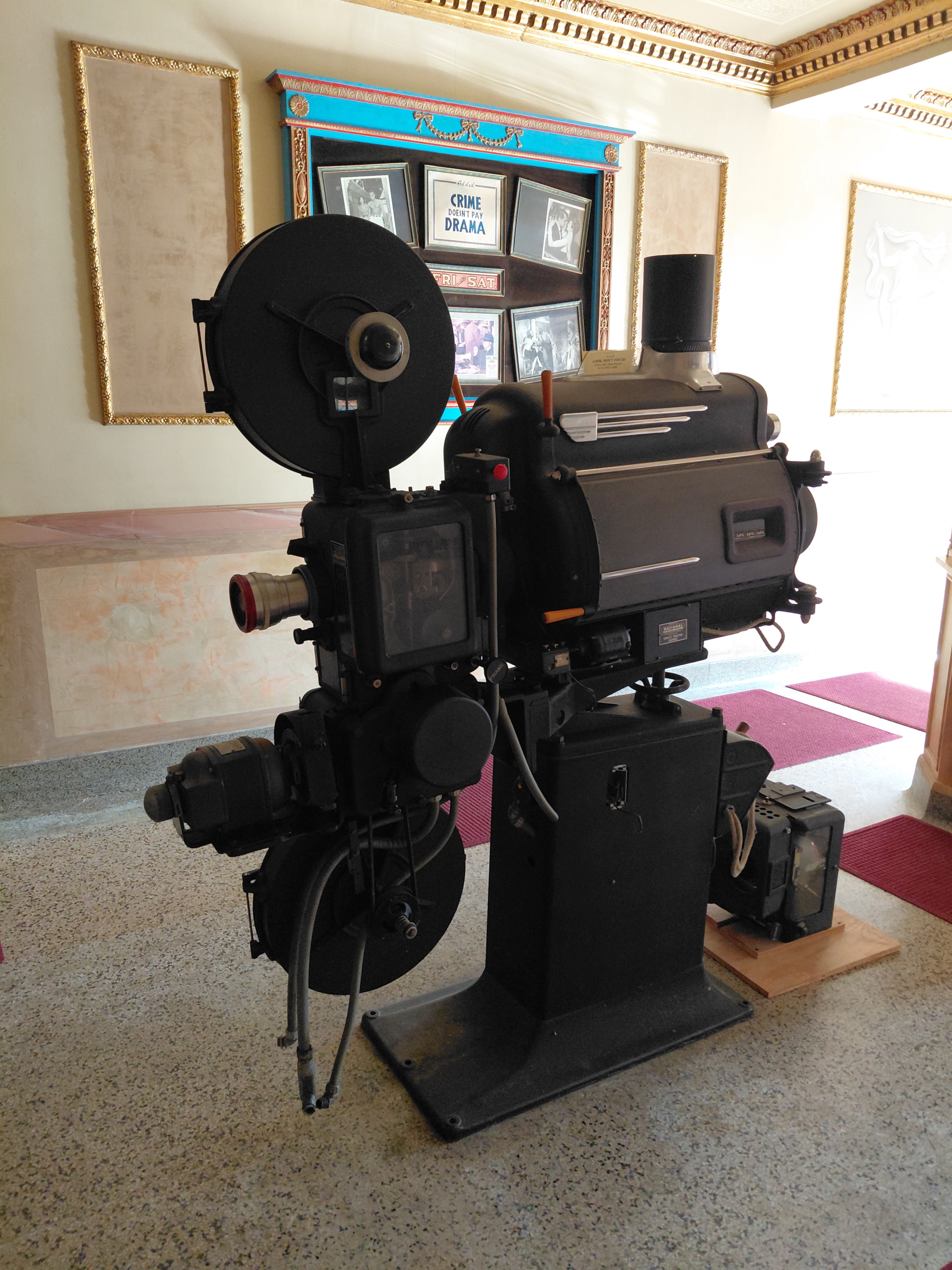
For generations, machines like this carried motion pictures from strips of 35mm film to the theatre screen. Preserved at Tahqua Land Theatre, this Simplex X-L represents the mechanical heart of film exhibition before the arrival of digital cinema.
The Machine Behind the Movies
Before digital cinema, a motion picture arrived at the theatre as physical film. The projectionist had to prepare that film, thread it correctly through the projector, bring the image into focus, and keep the picture moving smoothly across the screen.
The Simplex X-L was built for that demanding work. During a performance, 35mm film moved through the machine at a carefully controlled speed while the projector advanced the image one frame at a time. A shutter interrupted the beam of light between frames, allowing a rapid sequence of still photographs to appear as continuous motion to the audience.
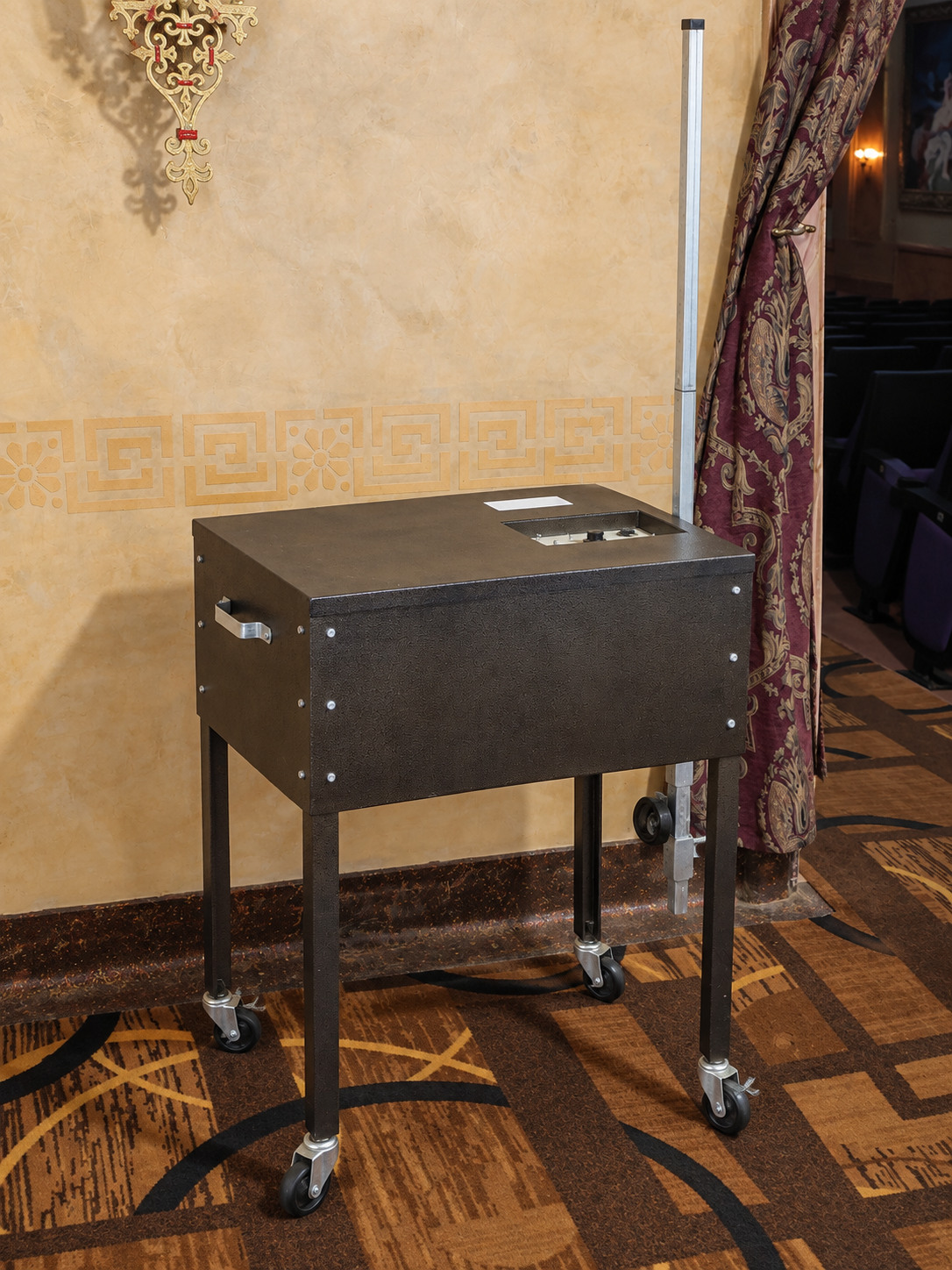
The projector itself was only one part of the system. Behind it, a powerful lamphouse supplied the intense light needed to send the image across the auditorium. At Tahqua Land Theatre, the preserved projection equipment includes a Peerless Magnarc carbon-arc lamphouse, another important part of the story of traditional film presentation.
Operating this equipment required more than simply pressing a button. Projectionists watched film tension, focus, framing, illumination, reel changes, and the condition of the film itself. A smooth performance depended on both the machinery and the person working beside it.
Why Two Projectors?
A feature film did not arrive at the theatre as one continuous roll. It was divided among several reels, which meant the projectionist had to move from one reel to the next without interrupting the movie for the audience.
Traditional projection booths commonly used a pair of projectors. While one machine was showing a reel, the next reel could be threaded and prepared on the second projector. Near the end of the first reel, small cue marks appeared briefly in the upper corner of the picture.
Those marks told the projectionist when to start the second machine and when to switch the picture and sound from one projector to the other. When performed correctly, the audience saw a continuous movie and never noticed that the film had changed from one reel — and one projector — to another.
The process demanded timing, attention, and familiarity with the equipment. A missed cue, poor synchronization, or improperly prepared reel could make the changeover visible or interrupt the presentation.
The transition from one reel and projector to the next was known as a changeover. It was one of the projectionist’s most important jobs during a traditional 35mm presentation.
Look Closely
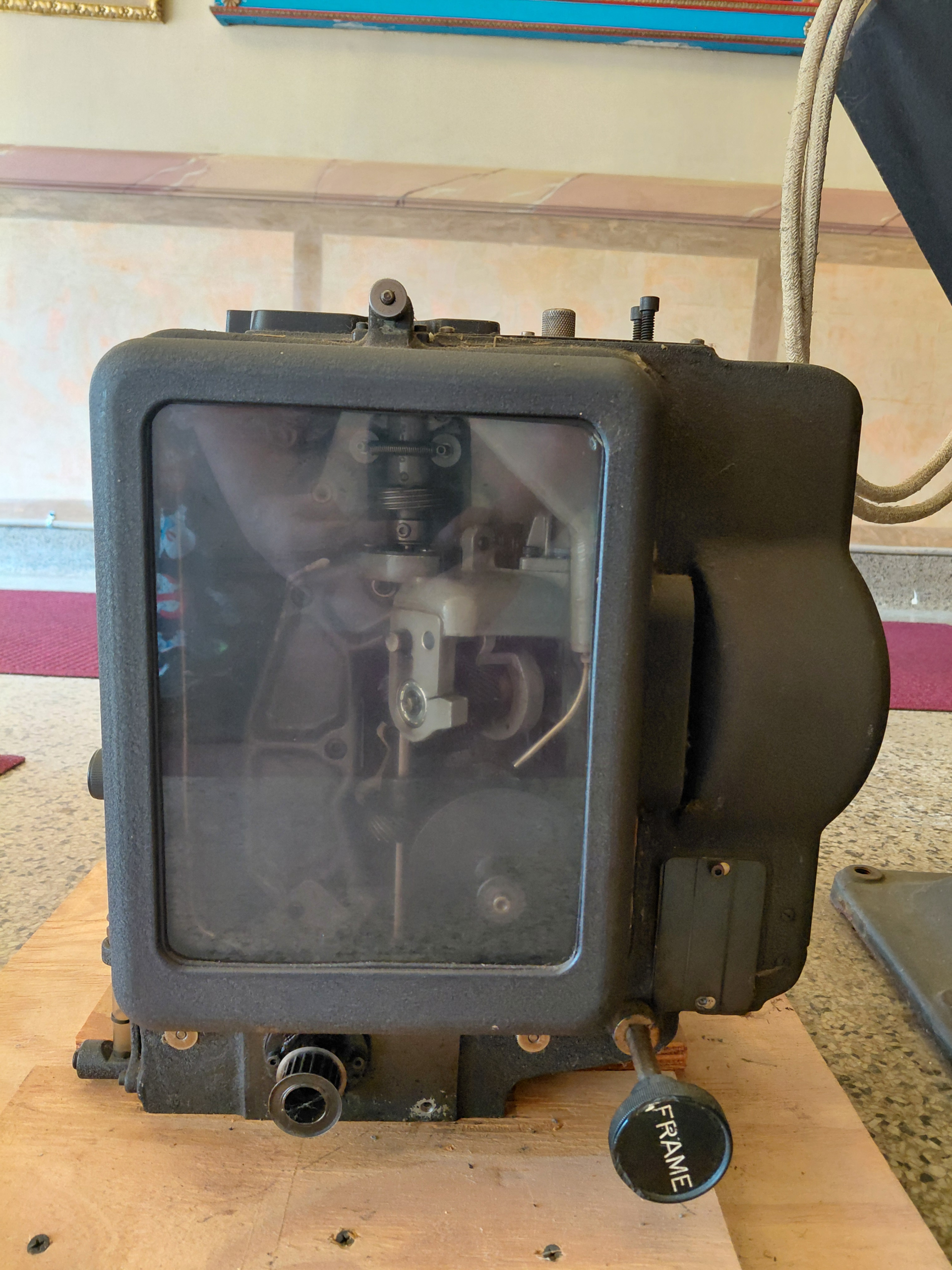
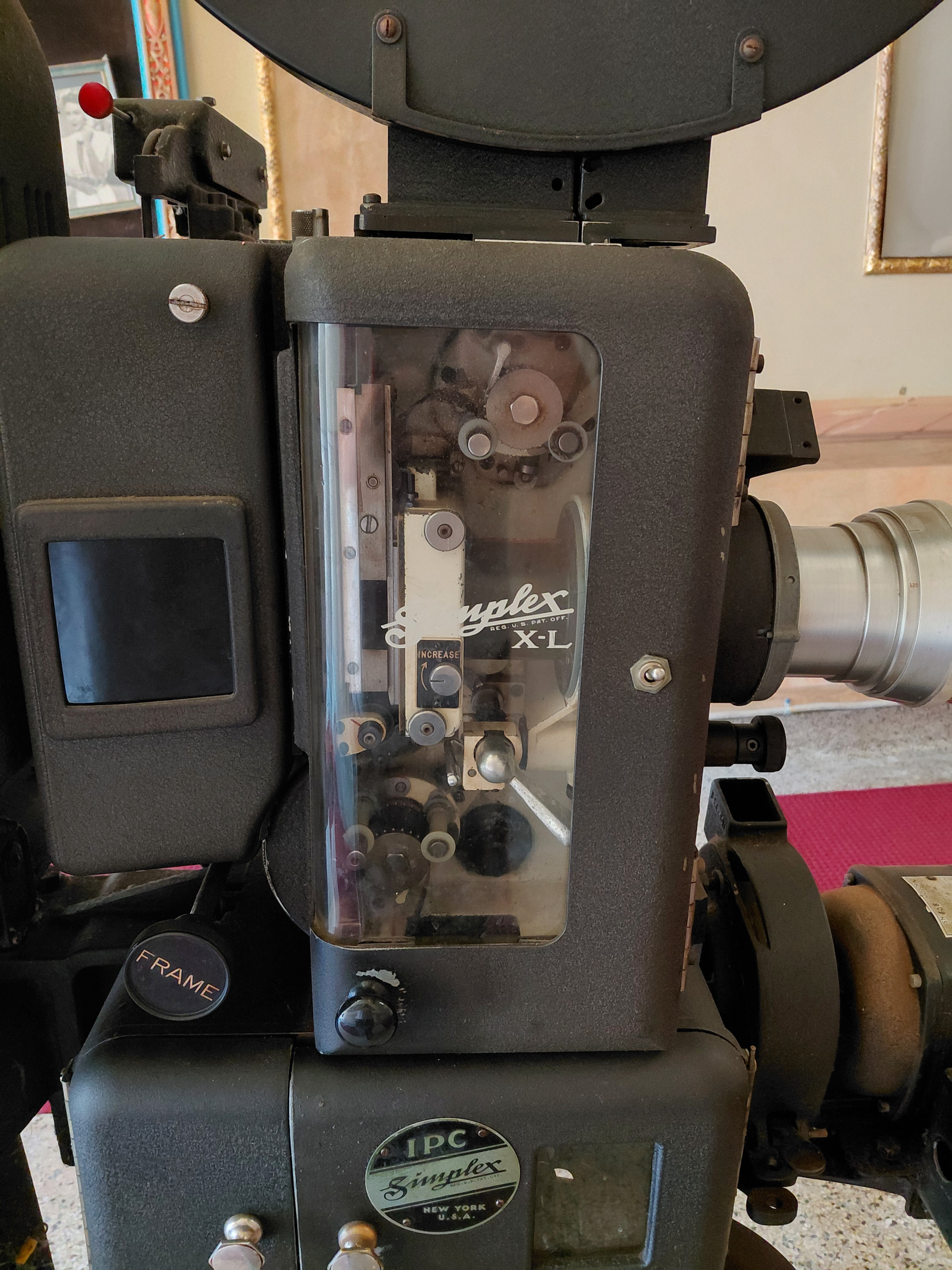
Open the projector and the simplicity of a movie on the screen gives way to a carefully arranged mechanical system. Film had to travel through the projector in a precise path while remaining properly aligned, tensioned, and positioned for projection.
During a show, the projectionist regularly watched this machinery. A problem with film movement, alignment, or focus could quickly become visible to everyone in the auditorium.
The surviving machinery makes it possible to see the physical process that once happened behind every film presentation — a process largely hidden from audiences seated on the other side of the projection-room wall.
Look Closer
These photographs document the projector, its identification plates, internal mechanism, and related projection-booth equipment preserved with the Tahqua Land Theatre collection. Select any image for a larger view.