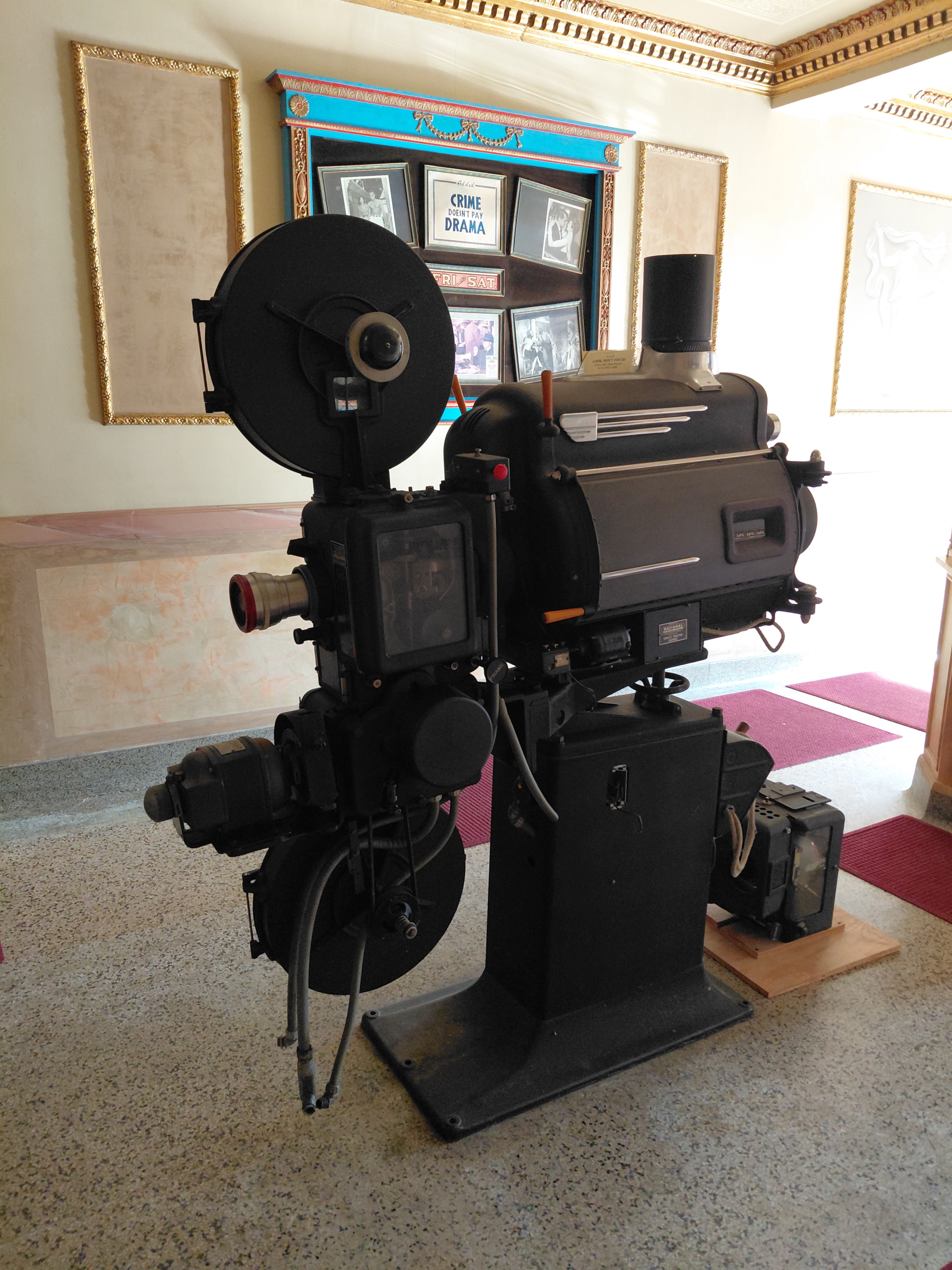
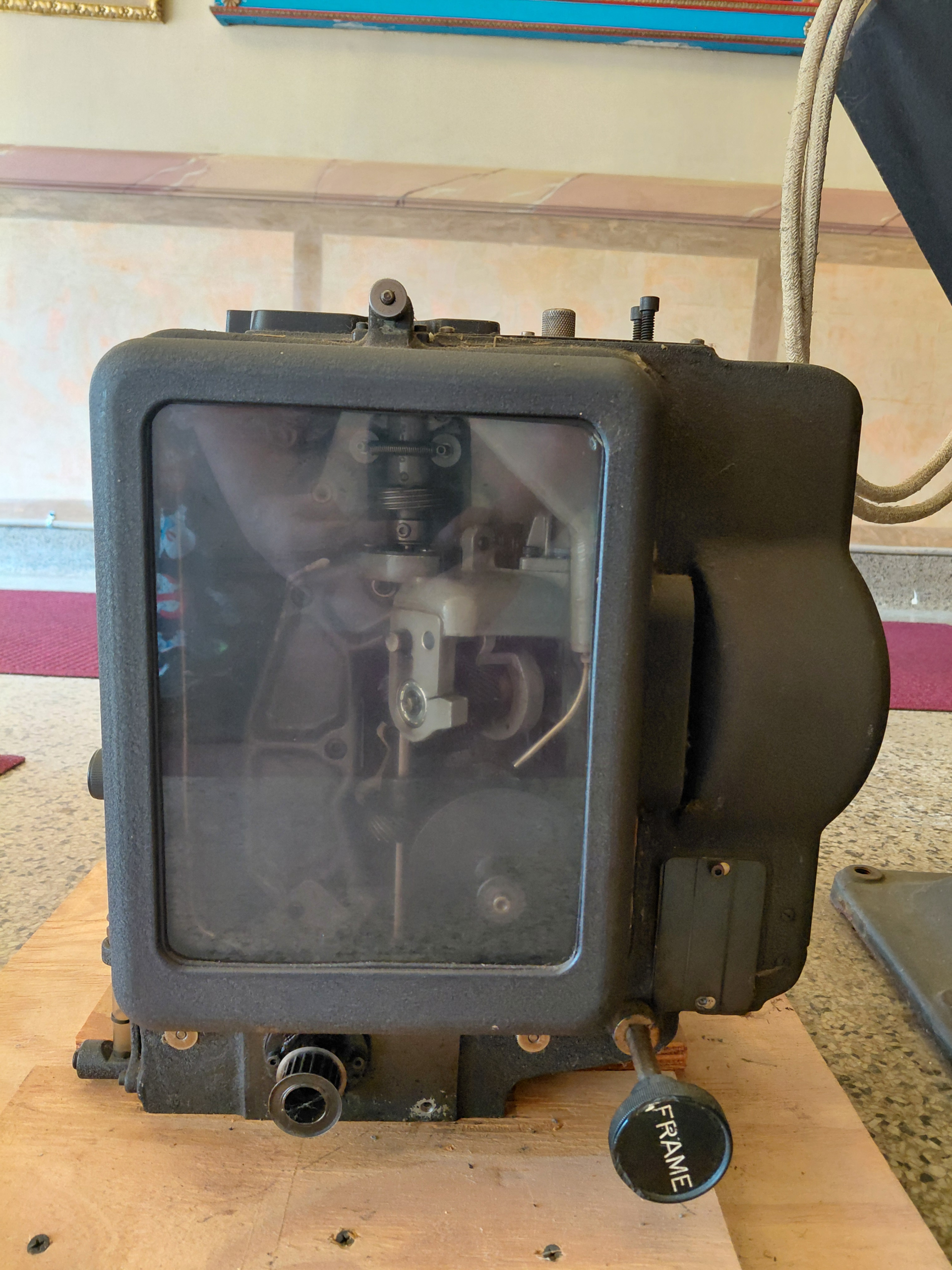
Peerless Magnarc Carbon-Arc Lamphouse
Before xenon lamps and digital projectors, movie theatres relied on carbon-arc light to produce the intense illumination needed to send a motion-picture image across the auditorium. This preserved Peerless Magnarc tells that part of the projection story.
The Light That Made Film Visible
A film projector could move 35mm film through the machine, but that alone could not create a picture on the screen. The photographic image on the film had to be illuminated by an exceptionally bright and carefully controlled source of light.
The Peerless Magnarc lamphouse performed that job. Positioned behind the projector, it produced the intense light that passed through the film and into the projector’s optical system. The resulting beam then carried the enlarged image across the auditorium to the screen.
In the era of carbon-arc projection, producing that light was an active part of running a show. The projectionist was responsible not only for the film and projector, but also for maintaining the illumination that made the image visible to the audience.
Preserved alongside the Simplex X-L projector, the Magnarc helps show that traditional film presentation was not the work of a single machine. It was a coordinated system of film transport, light, optics, electrical equipment, and skilled human attention.
How Carbon-Arc Light Worked
Carbon-arc projection created an exceptionally bright point of light by passing electrical current between carbon electrodes. The Magnarc controlled that light and directed it toward the film projector.
Carbon Rods
Carbon electrodes were positioned inside the lamphouse. They were part of the light-producing system rather than the film projector itself.
The Electrical Arc
When current crossed the small gap between the carbons, it produced an extremely bright electrical arc suitable for theatrical projection.
Controlling the Light
The lamphouse concentrated and directed the arc’s light toward the projector so it could pass through the film and optical system.
Onto the Screen
After passing through the film, the illuminated image traveled through the projection lens and across the auditorium to the screen.
The carbon electrodes were consumed as the arc operated, so maintaining a steady, properly positioned light was part of the projectionist’s work. Consistent illumination depended on both the equipment and the person operating it.
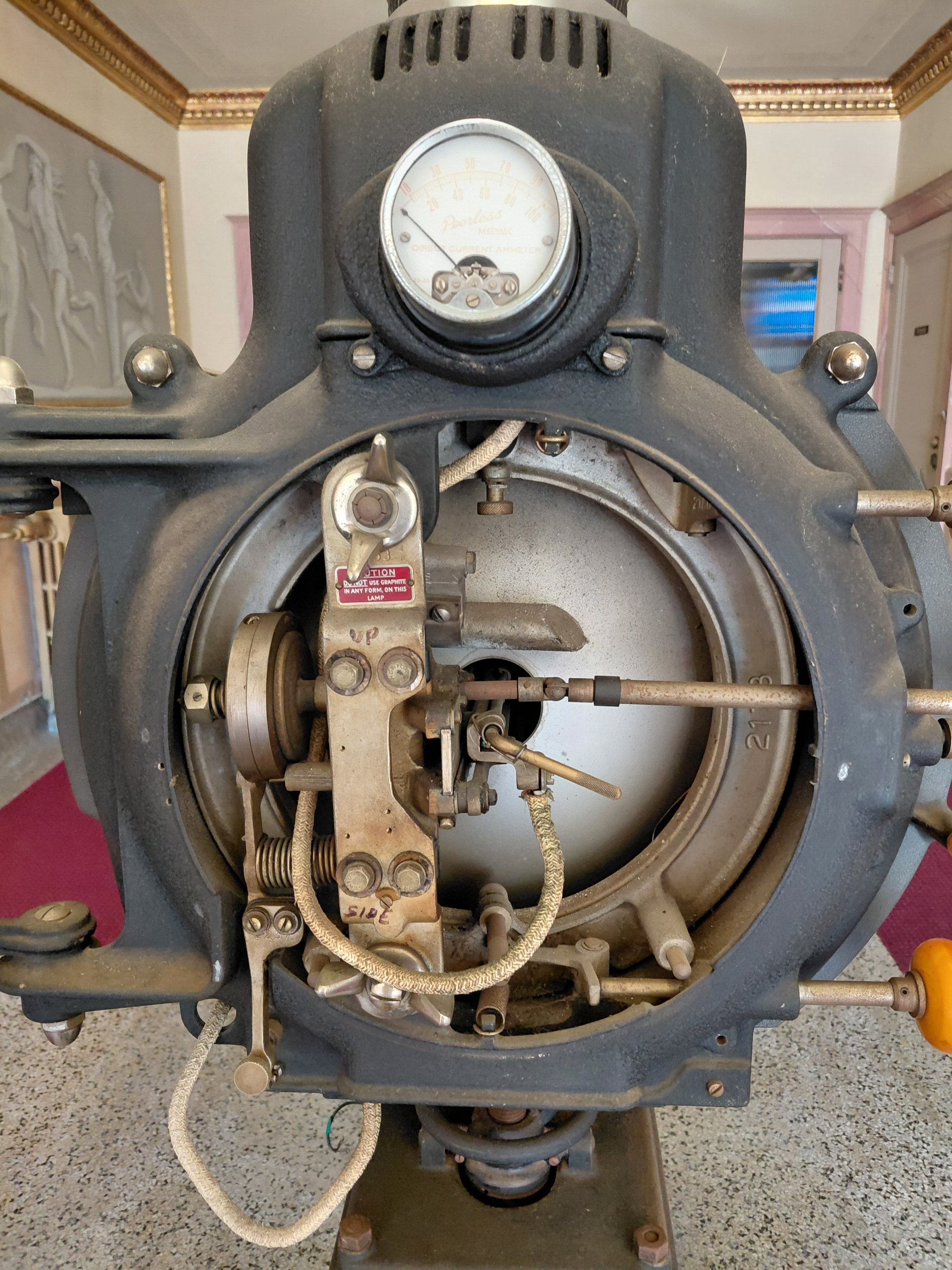
Look Closely
Inside the Magnarc, the light source was part of a mechanical and electrical system designed to hold, position, and control the carbon electrodes while directing their brilliant arc toward the projector.
Unlike a modern sealed projection lamp, carbon-arc illumination required active management. The carbons were gradually consumed during operation, so the equipment had to maintain the proper relationship between them as the show continued.
This surviving equipment reveals how much of traditional film presentation depended on machinery that audiences rarely saw. The finished picture on the screen was the result of several systems operating together behind the projection-room wall.
Inside the Magnarc
These photographs document the preserved Peerless Magnarc carbon-arc lamphouse from several viewpoints. Select any image for a larger view.