Optical Cinema Sound
EPRAD Exciter Lamp Power Supply
How light became movie sound.
Before a movie soundtrack could reach the theater’s speakers, it first had to be read from the film. For decades, that process began with something surprisingly simple: light.
Listen to the Story
When Movie Sound Was Read With Light
Hear how an optical soundtrack, an exciter lamp, and a photoelectric cell worked together to turn a pattern on film into the sound heard by an audience.
Sound Stored as an Image
The Soundtrack Was Part of the Film
A 35 mm film print carried more than pictures. Running beside the image frames was a photographic soundtrack containing the information needed to reproduce the movie’s audio.
Sound Could Be Photographed
In an optical sound system, the movie’s voices, music, and effects were represented as a changing photographic pattern along the edge of the film.
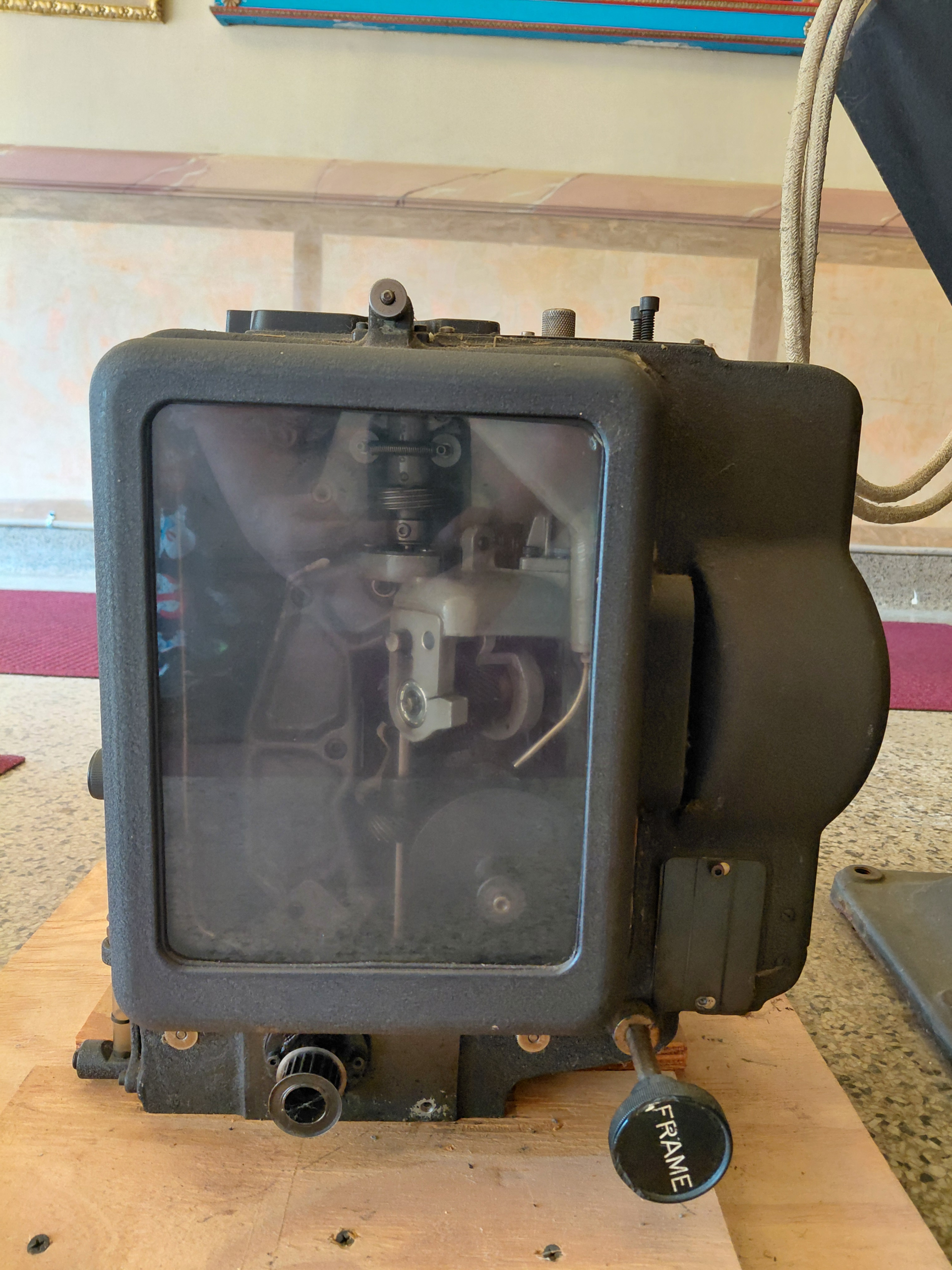
As the film moved through the projector’s soundhead, a controlled beam of light illuminated that soundtrack.
The soundtrack changed how much light reached a photoelectric or solar cell. The cell responded to those changing light levels and converted them into a changing electrical signal.
That electrical signal was the beginning of the audio that would eventually reach the theater’s amplifiers and speakers.
From Film to Electrical Audio
Frames Carried the Images
The familiar sequence of photographic frames created the moving picture projected onto the theater screen.
The Edge Carried the Audio
A separate optical pattern running along the film represented the soundtrack that accompanied those images.
Light Connected the Two Worlds
The soundhead used light and a photosensitive cell to translate the physical soundtrack pattern into an electrical signal.
A Different Kind of Light
What Was an Exciter Lamp?
A film projector used more than one important light source. One created the picture on the screen. Another helped reproduce the soundtrack.
Projection Light
Bright Enough to Fill the Screen
The projector’s main light source had one obvious job: illuminate the film image strongly enough to produce a bright, visible picture across the auditorium.
Depending on the era, that light might come from carbon arc, xenon, or another projection technology.
Its defining requirement was intensity.
Exciter Lamp
Stable Enough to Read the Sound
The exciter lamp had a very different job. It illuminated the optical soundtrack inside the projector’s soundhead so a photosensitive cell could read the changing pattern on the film.
It did not need to light the theater screen. It needed to provide controlled, consistent illumination for accurate sound reproduction.
Its defining requirement was stability.
Light Where It Was Needed
The optical system concentrated the exciter lamp’s light onto the narrow soundtrack area rather than illuminating the entire film frame.
A Steady Reference
The soundtrack was supposed to control the changing light. The lamp itself therefore needed to remain as stable as practical.
Reading While the Film Moved
As the film continuously passed through the soundhead, the exciter lamp and photosensitive cell continuously translated the optical pattern into an audio signal.
The projection lamp made the movie visible. The exciter lamp helped make it audible.
More Than Just Electricity
Why the Power Supply Mattered
The exciter lamp could only read the soundtrack accurately if its light remained steady enough for the sound system to trust.
The Light Source Was Part of the Audio System
In an optical sound system, the photoelectric cell responded to changes in light intensity.
Ideally, those changes came from only one place: the soundtrack printed on the film.
If the electrical supply caused the exciter lamp itself to fluctuate, the photosensitive cell could respond to those unwanted changes as well.
That meant an electrical problem could become an audio problem. The power supply therefore played a direct role in the quality of the soundtrack heard by the audience.
How Electrical Variation Could Become Audible
Keep the Light Steady
The soundtrack needed to control the changing light level, not unwanted fluctuations from the electrical supply.
Keep the System Working
Projection-booth equipment had to operate dependably through complete film programs, often for years of regular service.
Protect the Signal
The cleaner the signal entering the cinema processor, the better chance the rest of the theater sound system had of reproducing the soundtrack faithfully.
Projection Booth Controls
Reading the Front Panel
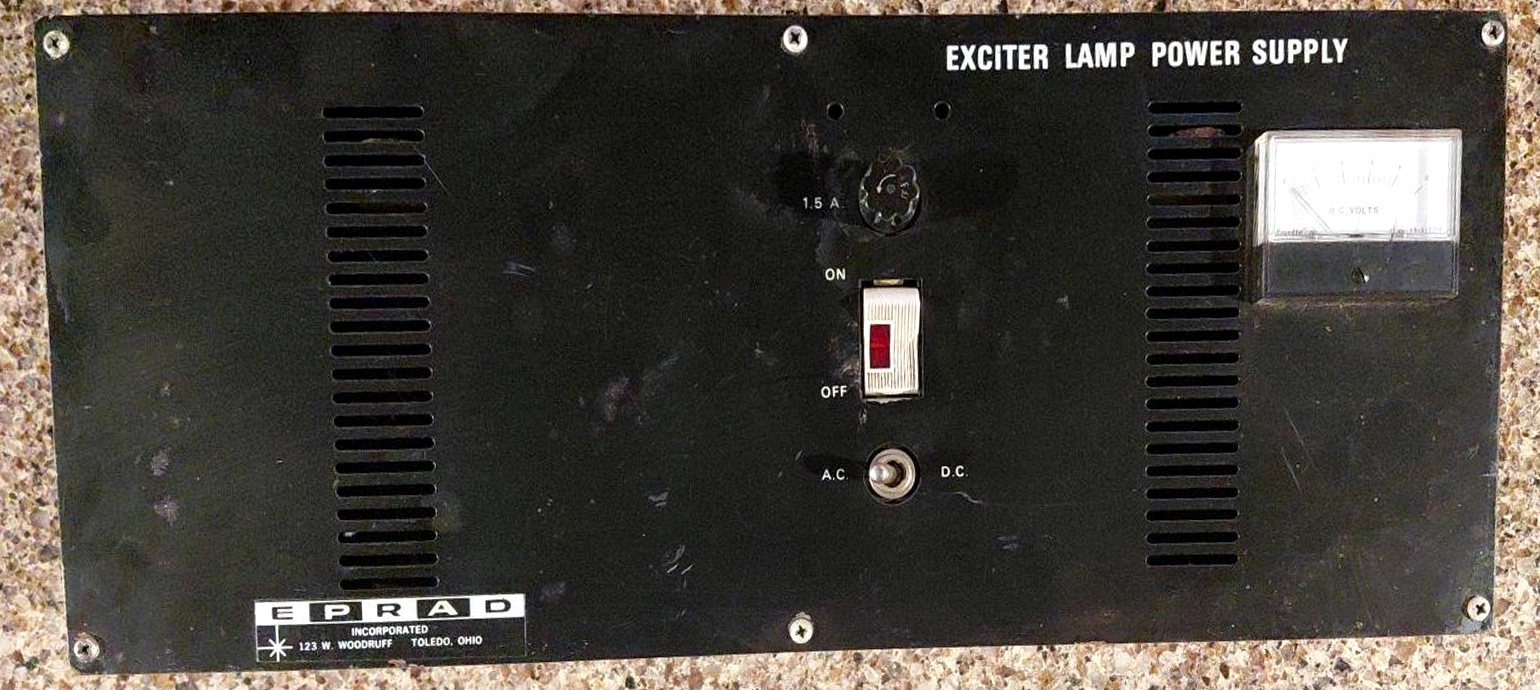
The surviving controls on this EPRAD unit offer clues about how the power supply was operated and monitored in the booth.
A.C. / D.C.
The front panel includes a toggle switch marked A.C. and D.C., showing that the unit provided more than one electrical operating condition or mode.
On / Off Switch
A dedicated front-panel switch allowed the power supply to be turned on or off directly from the equipment rack.
1.5 Amp Fuse
The marked 1.5-amp fuse holder protected the electrical circuit against excessive current and provided a serviceable point of protection for the unit.
Analog A.C. Voltmeter
The surviving meter face is marked “A.C. VOLTS,” allowing the operator or technician to monitor an electrical reading visually during operation or servicing.
Ventilation Openings
The large vented areas on the faceplate allowed heat generated by the electrical components inside the chassis to escape.
EPRAD Manufacturer Plate
The surviving plate identifies EPRAD Incorporated and gives the company’s Toledo, Ohio address, tying this artifact directly to a manufacturer with long involvement in theater equipment.
Two Artifacts, One Sound Chain
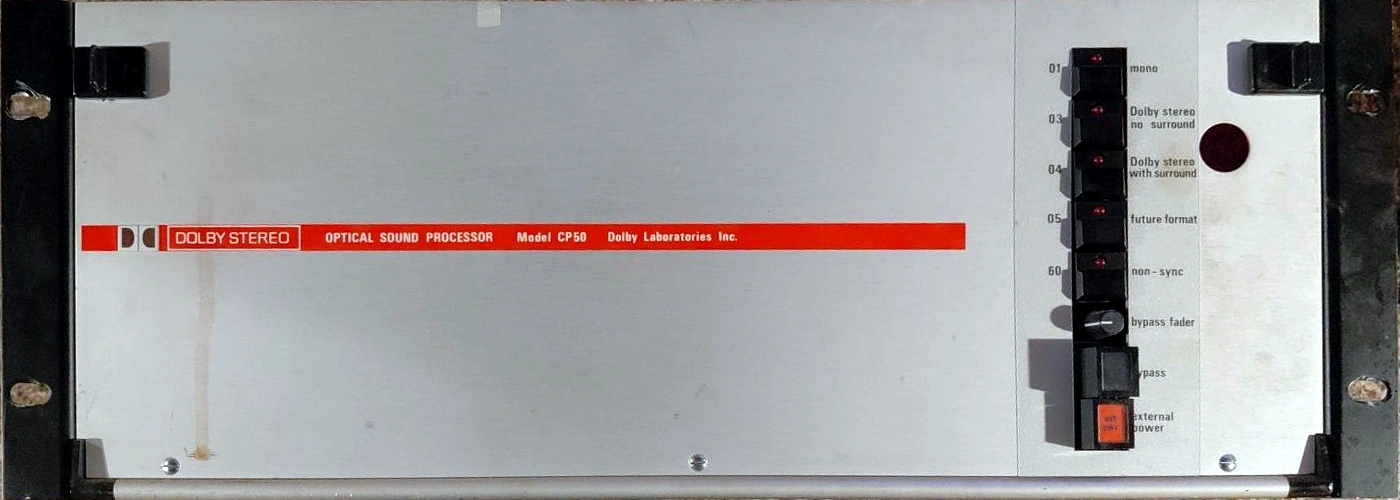
From Light to the Dolby CP50
The EPRAD power supply and the Dolby CP50 performed very different jobs, but both belonged to the larger process that carried sound from a strip of film to the audience.
First Stage
Read the Soundtrack
The EPRAD power supply supported the exciter lamp used in the projector’s optical sound system.
That light illuminated the soundtrack on the film, allowing a photoelectric cell to convert the changing optical pattern into an electrical audio signal.
Next Stage
Process the Signal
Once the soundtrack had become an electrical signal, cinema processing equipment could prepare it for reproduction in the auditorium.
A processor such as the Dolby CP50 could decode and shape that signal before sending the appropriate outputs onward to the theater’s amplifiers and loudspeakers.
A Simplified Optical Cinema Sound Chain
Stored the Information
The optical soundtrack physically carried the movie’s audio information alongside the picture frames.
Translated and Processed It
The soundhead, exciter lamp, photoelectric cell, and cinema processor transformed the soundtrack into usable audio.
Turned It Back Into Sound
Amplifiers and speakers completed the journey by transforming the electrical signal into the voices, music, and effects heard by the audience.
Viewed together, the EPRAD supply and CP50 help reveal something a single artifact cannot: a projection booth was a chain of specialized machines, each depending on the others.
Behind the Screen
A Projection Booth Was a System
The projector was only one part of a theatrical presentation. Picture, sound, power, control equipment, and the projectionist all had to work together.
No Single Machine Made the Movie Happen
From the auditorium, a film presentation could seem simple: the lights dimmed, the picture appeared, and sound filled the room.
Behind the scenes, however, a projection booth contained multiple specialized systems performing different jobs.
One mechanism moved the film. Another produced the intense light used for the picture. A separate optical system read the soundtrack. Cinema processors prepared the audio, amplifiers supplied power, and loudspeakers reproduced it throughout the auditorium.
The presentation depended on the entire chain. A failure in one seemingly minor component could affect the experience seen or heard by everyone in the theater.
Move the Film
Projector mechanisms advanced the film at the precise speed needed to keep picture and sound synchronized.
Create the Picture
Carbon-arc, xenon, and later light sources provided the powerful illumination needed to place the image on the screen.
Read the Soundtrack
The exciter lamp, optics, and photoelectric cell translated the photographic soundtrack into an electrical audio signal.
Shape the Audio
Cinema processors handled the incoming soundtrack and prepared it for reproduction through the theater’s sound system.
Supply the Power
Audio amplifiers provided the electrical power required to drive the loudspeakers throughout the auditorium.
Coordinate the Show
Switches, automation systems, relays, and the projectionist coordinated equipment so the presentation unfolded correctly.
One Weak Link Could Affect the Whole Presentation
The EPRAD power supply is a reminder that the moviegoing experience depended on many pieces of equipment audiences never knew were there.
The Company Behind the Artifact
EPRAD and the Theater Industry
This power supply was produced by a company with longstanding ties to motion-picture exhibition, projection technology, theater sound, and drive-in cinema.
Built in Toledo for the Theater Business
Historical industry directories identify EPRAD, Inc. at 123 W. Woodruff in Toledo, Ohio — the same address visible on the manufacturer plate of this artifact.
EPRAD was active across several areas of motion-picture exhibition, including theater sound, projection equipment, automation, electrical systems, and drive-in theater technology.
By the early 1980s, industry listings described the company as manufacturing stereo-optical sound processors, optical amplifiers, automation systems, sound heads, drive-in speakers, xenon lamphouses, film-handling equipment, and other specialized theater products.
That makes this exciter-lamp power supply part of a much larger EPRAD story — one centered on the equipment required to make movie exhibition work behind the scenes.
EPRAD Leadership
Industry biographical records identify Albert Boudouris as president of EPRAD beginning in 1949.
Drive-In Sound
Period reports document EPRAD high-fidelity stereophonic drive-in speakers in theater installations, while surviving EPRAD speakers are preserved in museum collections today.
Complete Theater Systems
EPRAD expanded across cinema sound, automation, amplification, projection, film handling, and other equipment used throughout the theater.
More Than One Kind of Equipment
EPRAD supplied technology throughout the theater.
A 1982 industry directory listed a remarkably broad range of EPRAD products for theatrical exhibition.
A Familiar Idea in a Different Form
Light Can Carry Information
Optical film sound may seem like an old technology, but the idea behind it is still easy to recognize: changes in light can represent information.
The Soundtrack Controlled the Light
In an optical film sound system, the soundtrack changed the amount of light reaching a photosensitive cell.
Those changing light levels represented the information needed to reproduce voices, music, and sound effects.
The detector did not understand dialogue or music. It simply responded to light.
Electronics then transformed those changes into an audio signal that could be processed, amplified, and ultimately turned back into sound.
Optical Film Sound
A photographic soundtrack controlled the light reaching a photoelectric cell, creating an electrical audio signal.
Fiber Optics
Modern fiber-optic systems transmit information using controlled pulses of light guided through glass or plastic fibers.
Optical Discs
CD, DVD, and Blu-ray systems use focused light to detect microscopic physical or optical differences representing stored information.
Barcodes & Scanners
Optical scanners detect patterns of reflected light and convert those patterns into information a computer can interpret.
The Shared Idea
The technology has changed dramatically, but the underlying idea remains powerful: light can do more than illuminate — it can communicate.
Looking Back
Why This Object Matters
The EPRAD power supply helps reveal an important part of cinema history that audiences rarely saw: the hidden equipment required to transform a strip of film into a complete audiovisual experience.
An Invisible Job With an Audible Result
Before the soundtrack could be processed or amplified, the theater first needed a reliable way to read it.
Optical film sound depended on a carefully controlled chain. A light source illuminated the soundtrack, a photosensitive cell converted changing light into an electrical signal, and the rest of the theater’s sound system carried that signal to the audience.
The EPRAD power supply supported one of the earliest steps in that chain by providing power for the exciter lamp.
It was not glamorous equipment. Most moviegoers never knew it existed. Yet if the light became unstable or disappeared, the soundtrack could suffer with it.
Sound Was Physically Stored
The soundtrack existed as a photographic pattern printed directly alongside the images on the film.
Reading Required Precision
The optical reader depended on controlled illumination so the soundtrack — rather than unwanted electrical variation — determined the changing light level.
Every Stage Depended on the Last
The cinema processor, amplifiers, and speakers could only work with the signal successfully created earlier in the chain.
Collection Reference
Artifact Details
- Object
- EPRAD Exciter Lamp Power Supply
- Manufacturer
- EPRAD Incorporated
- Location
- Toledo, Ohio
- Primary Function
- Supplying power for an optical-sound exciter lamp
- Used With
- 35 mm optical film sound systems
- Visible Controls
- A.C./D.C. selector, power switch, 1.5 A fuse holder
- Meter
- Analog meter marked A.C. VOLTS
- Related Artifact
- Dolby CP50 Cinema Processor
- Collection
- Tahqua Land Theatre
- Historical Theme
- Using light to translate an optical soundtrack into sound
At first glance, this may look like little more than an old electrical panel. In reality, it represents one of the hidden steps that made film sound possible: before audiences could hear the movie, light first had to read it.