
The Collection • Behind the Scenes
Clearing the Air
Ozone and the Movie Theater
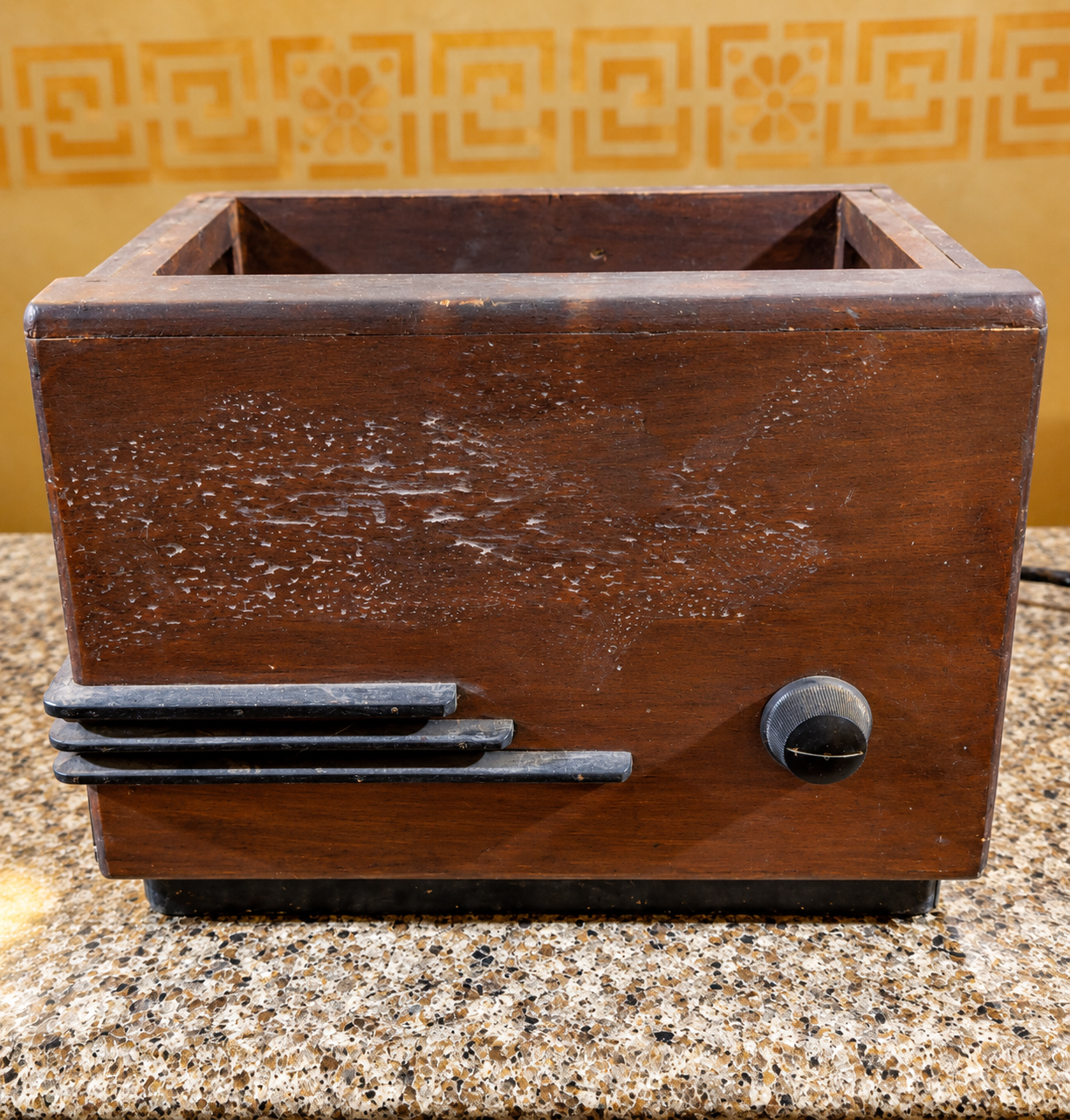
Among the equipment discovered in storage at Tahqua Land Theatre was something unexpected: an old ozone generator.
Why would a movie theater have one?
Hear the History
Listen as Alistair introduces the story behind this unusual piece of theater technology.
The First Clue • Michigan, 1937
Another Theater Had One
The machine found at Tahqua Land is a mystery. But a Michigan newspaper from 1937 shows that ozone equipment was not out of place in a movie theater.
A Second “Ozonator”
On September 9, 1937, the Berrien County Record reported that the Hollywood Theatre in Buchanan, Michigan, had installed a second ozone air purifier.
According to the article, the theater considered its first unit successful enough that manager Hoffman purchased another. The second machine was described as having enough capacity, under normal conditions, for a theater twice the size of the Hollywood.
Ozone equipment was still unfamiliar enough to the public that theater management offered to explain and demonstrate the machines to interested patrons.
Just as importantly, the article described the ozone machines as part of a larger air-handling system. An exhaust fan removed old air while a 7½-horsepower blower brought fresh air into the building.
This does not prove that the ozone generator found at Tahqua Land Theatre was used here. It does establish something important: Michigan movie theaters really were using ozone-generating equipment during this period—even while audiences were watching the show.
The Trail Gets Stronger • 1939
The Theater Industry Was Talking About Ozone
By 1939, ozone had moved beyond the realm of novelty and into the theater industry’s conversation about stale air, odors, and ventilation. To theater operators of the period, its strong chemical reactivity appeared to offer another tool for improving conditions inside crowded public spaces.
An “Ozone Generator” for Theaters
In January 1939, Better Theatres, appearing within Motion Picture Herald, described an electric-discharge ozone generator developed by the National Ozone Machine Company of Indianapolis.
The article explained that electrical discharges inside a ventilated metal enclosure converted some of the oxygen in passing air into ozone.
The appeal was understandable in the context of the time. The article specifically discussed close and stuffy portions of a theater, poorly ventilated toilets, and other unpleasant air conditions—places where an agent thought to attack odors and organic impurities could seem especially useful.
Then We Found the Name
Ozone-Air Inc.
Grand Rapids, Michigan
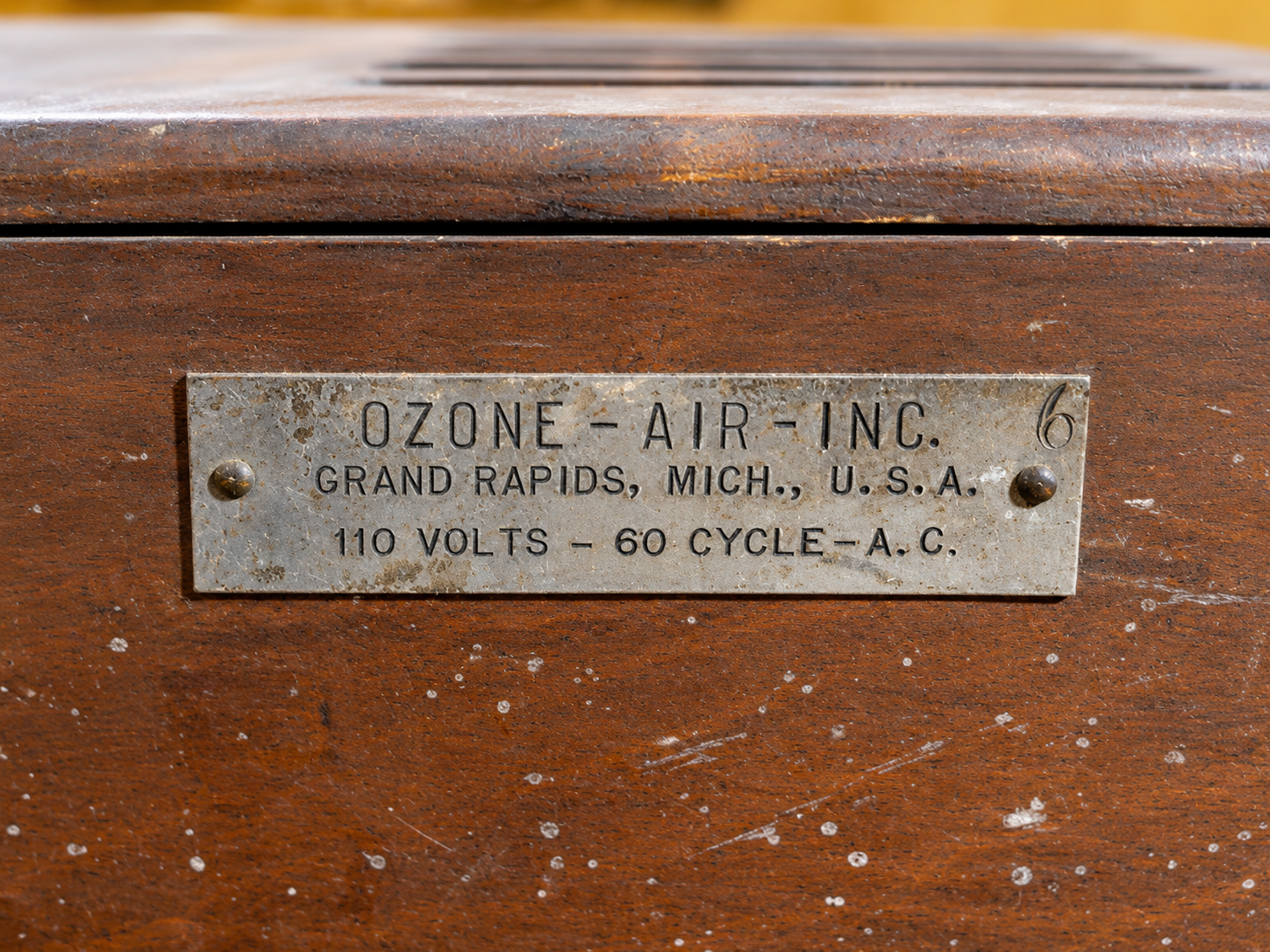
The surviving machine at Tahqua Land carries an identification plate naming Ozone-Air Inc. of Grand Rapids, Michigan.
That name also appears in the January 1939 Better Theatres material. An advertisement for Ozone-Air Inc. listed the company at 928 Cherry Street, Grand Rapids and promoted a product called the Ozone Curtain.
The advertisement does not tell us when this particular machine was manufactured, who purchased it, or how it came to Tahqua Land Theatre. But it does establish a direct historical link between the company named on our artifact and the motion-picture theater trade.
What the evidence does not tell us: We have not found a purchase record, installation record, operating instruction, or other document proving that this ozone generator was used at Tahqua Land Theatre. The company connection is real; the history of this particular machine at the theater remains an open question.
Why Ozone?
A New Answer to an Old Problem
To understand why a theater might invest in an ozone generator, we first have to look at the problem as a theater operator of the 1930s would have seen it.
Hundreds of People.
One Enclosed Room.
A movie theater could bring a large audience together in an enclosed auditorium for hours at a time. Heat, body odors, restrooms, dampness, cleaning needs and the everyday smells of a busy public building all contributed to the challenge of keeping the theater pleasant.
Smoking was also a familiar part of public life during this period, and surviving theater-industry literature documents cigarette butts and ash trays as ordinary features of theater operation. It was one more part of the environment operators had to manage—not necessarily the only reason for ozone.
Mechanical ventilation could move stale air out and bring fresh air in. But operators were also interested in technologies that promised to do something more: treat odors and improve the perceived quality of the air already inside the building. At the time, the science surrounding ozone exposure was still developing, and its use in occupied spaces was being considered through a very different understanding of the technology than we have today.
Move the Air
Fans, blowers and ventilation systems exchanged indoor air for fresh outside air.
Keep It Clean
Regular cleaning addressed the constant debris, dust and everyday demands of a heavily used public building.
Control Odors
Ozone equipment was promoted as another tool for dealing with stuffy spaces and objectionable smells.
Why It Seemed Promising
Ozone Offered Something Different
Ozone was not a brand-new curiosity by the 1930s. It already had a history of experimentation and use in areas such as water treatment, sanitation and air treatment. Its highly reactive nature made it attractive to people searching for ways to address odors and contaminants. What was less fully understood was where the line fell between useful treatment and harmful exposure to the people sharing the same air.
For a theater operator, that promise was easy to understand. Here was an electrical machine that could be incorporated into the building and was being promoted specifically for difficult indoor-air conditions. In an era fascinated by modern electrical and mechanical solutions, ozone could look like another step toward a cleaner, more comfortable theater. The important point is that this was not necessarily a choice made in defiance of known science. The understanding of ozone’s effects on people was still evolving, while its chemical reactivity was already being presented as a useful property.
The idea was understandable in its historical context. Ozone really is highly reactive, and that property made it seem useful for treating odors and contaminants. But the same chemistry would prove important for another reason: ozone can also react with living tissue. The risks of breathing ozone were not understood and controlled in the same way they are today. That difference between what the technology promised and what later science revealed is an important part of this machine’s story.
Inside the Machine
How Did It Work?
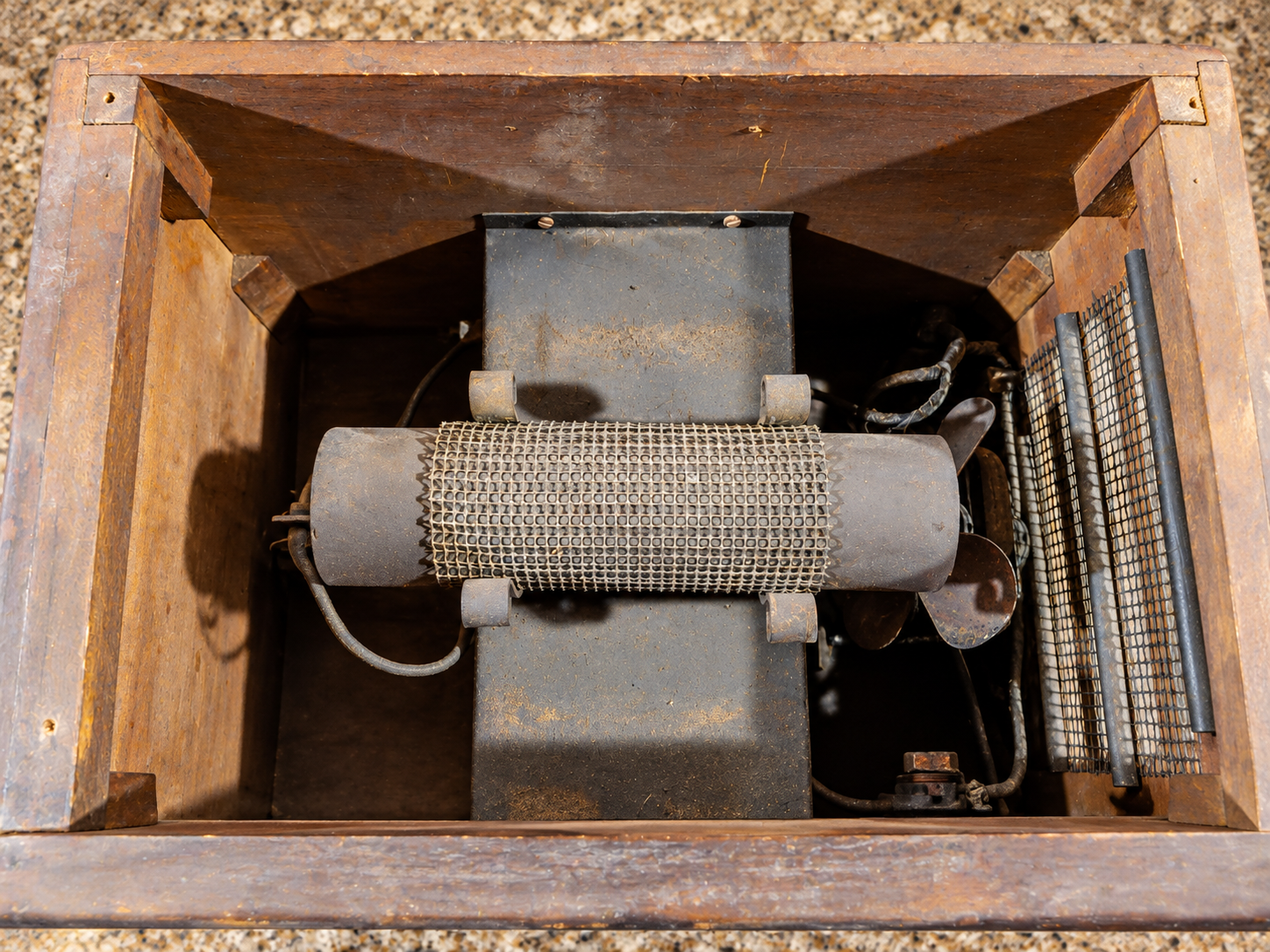
The surviving generator looks complicated when its cover is removed. But the principle behind an electrical-discharge ozone machine was surprisingly simple.
Electricity + Air
Creating Ozone from the Air Around It
Ordinary oxygen in the air normally exists as molecules made of two oxygen atoms—O2. An electrical discharge can split some of those molecules apart. Some of the freed oxygen atoms then combine with other oxygen molecules, producing ozone—O3.
That meant an ozone generator did not need a tank of chemical deodorizer. Its raw material was the air itself. Electricity supplied the energy needed to create the more reactive form of oxygen.
The exact internal arrangement varied among manufacturers and models. We have not yet found the operating manual for this particular Ozone-Air Inc. machine, so we should not assume the purpose of every surviving component inside it.
The Basic Process
Air Enters
Room air passes through or around the generating equipment, bringing ordinary oxygen into the machine.
Electricity Acts on Oxygen
An electrical discharge supplies energy that converts a portion of ordinary oxygen into ozone.
Ozone Enters the Air
The generated ozone mixes with the surrounding air, where its reactive chemistry was intended to address odors and other unpleasant conditions.
A theater-industry description from 1939 explained the process in much the same way: small electrical discharges inside a ventilated metal enclosure converted some of the oxygen in passing air into ozone. The publication then promoted that ozone for treating objectionable odors and unpleasant air conditions inside theaters.
The machine therefore tells two stories at once: one about electrical technology and another about chemistry. Ozone’s unusual reactivity was the reason people were interested in producing it—and the reason understanding exposure to it would eventually become so important.
A Changing Understanding
What They Knew
What We Know Now
The story of ozone is not simply one of a technology that was right or wrong. It is the story of scientific understanding changing over time. The same chemical properties that made ozone interesting to engineers and theater operators also led researchers to study its limitations. By the late 1930s, questions about how ozone behaved in ventilation systems were already being examined, but the knowledge available to a theater operator was not the same as the safety framework we have today.
The 1930s View
Ozone was associated with cleanliness, sanitation, and modern technology. Its ability to react with other substances made it appear useful for addressing odors and treating air.
Theater operators were working with the information and technology available to them. Ozone equipment was being promoted through industry publications as another tool for improving the experience of audiences. That does not mean that every question about exposure had been answered; it means that the technology was being considered within the scientific and commercial knowledge of its time.
The Modern View
Scientific understanding continued to develop after these machines were introduced. Researchers examined both the possible uses of ozone and the effects of exposure. Even during the period when ozone equipment was being promoted, researchers were investigating questions about its behavior and limitations.
Today, ozone is recognized as a substance that requires careful control because the same reactive chemistry that makes it useful can also affect living tissue. Modern safety practices therefore treat exposure very differently from the way these machines were once presented to the public.
The Science Continued to Evolve
Theater suppliers promoted ozone equipment while researchers continued studying its possibilities and limitations.
Ventilation researchers published work specifically examining ozone use in ventilation, including its limitations.
Occupational exposure standards and modern safety guidance developed as understanding of ozone exposure increased.
The Ozone-Air generator preserved at Tahqua Land Theatre is a snapshot of a moment when electrical technology, chemistry, and public expectations about indoor air came together. It reminds us that technology is always understood through the knowledge of its time—and that scientific knowledge does not arrive all at once.
The Ozone Era
When the Trade Press Sold the Idea
Ozone was not simply a laboratory curiosity. By the late 1930s, theater-industry publications were discussing machines designed specifically for theaters—and manufacturers were advertising ozone equipment directly to exhibitors.
Motion Picture Herald • Better Theatres • 1939
A Technology Being Explained to Theater Operators
The 1939 theater trade material did more than mention ozone. It described how an ozone generator worked, discussed the capacities of different machines, and considered where such equipment could be useful inside a theater. That tells us something important about the technology’s place in the industry: it was being presented as a practical building technology, not merely as an experimental novelty.
The Promise
“to get rid of objectionable odors”
From the 1939 theater-trade discussion of ozone generators. The wording reflects the period’s understanding and marketing of the technology.
The Setting
“close and stuffy portions of a theater”
The same trade material specifically identified difficult indoor areas where ozone equipment was being considered.
A Snapshot of an Emerging Technology
For a theater operator in the late 1930s, ozone could represent modern engineering applied to a very ordinary problem: making a large public building more comfortable for the people inside it. The surviving machine gives us a physical connection to that moment in time—even though its individual journey to Tahqua Land remains undocumented.
The Ozone Era
When the Trade Press Promoted the Technology
Ozone was not simply a laboratory curiosity. By the late 1930s, theater-industry publications were discussing machines designed specifically for theaters—and manufacturers were advertising ozone equipment directly to exhibitors.
Motion Picture Herald • Better Theatres • 1939
A Technology Being Explained to Theater Operators
The 1939 theater trade material did more than mention ozone. It described how an ozone generator worked, discussed the capacities of different machines, and considered where such equipment could be useful inside a theater. Ozone was being presented to theater operators as a practical technology for addressing unpleasant indoor-air conditions.
The Promise
“to get rid of objectionable odors”
From the 1939 theater-trade discussion of ozone generators. The wording reflects how the technology was being presented at the time.
The Setting
“close and stuffy portions of a theater”
The same trade material specifically identified difficult indoor areas where ozone equipment was being considered.
A Snapshot of an Emerging Technology
For a theater operator in the late 1930s, ozone could represent modern engineering applied to a very ordinary problem: making a large public building more comfortable for the people inside it. The surviving machine gives us a physical connection to that moment in time—even though its individual journey to Tahqua Land remains undocumented.
Preserving the Past
More Than a Machine
We may never learn every detail of this machine’s journey to Tahqua Land Theatre. But that uncertainty does not make the artifact less valuable. It is part of what makes it worth preserving.
Technology
It preserves a piece of the electrical and mechanical technology that theater operators once used to solve everyday problems.
Ideas
It records a time when ideas about clean air, comfort, sanitation, and modern engineering were changing rapidly.
Questions
It reminds us that historical objects can preserve questions as well as answers—and that research can continue long after an object enters a museum collection.
The surviving machine connects a small-town theater in Michigan with a much larger story about motion pictures, engineering, chemistry, public spaces, and the changing technology of everyday life.
That is what makes objects like this worth preserving. They allow us to look beyond the screen and discover the many systems, technologies, assumptions, and people that made the moviegoing experience possible.
The story of this machine is not finished. A photograph, record, manual, or personal memory discovered in the future may tell us more about where it came from—and perhaps whether it ever helped clear the air for an audience at Tahqua Land Theatre.
Every artifact leaves us with something to learn. And sometimes the most interesting part of history is the question that remains unanswered.