
When the World Came Through the Radio
TruTone Table Radio • c. 1940
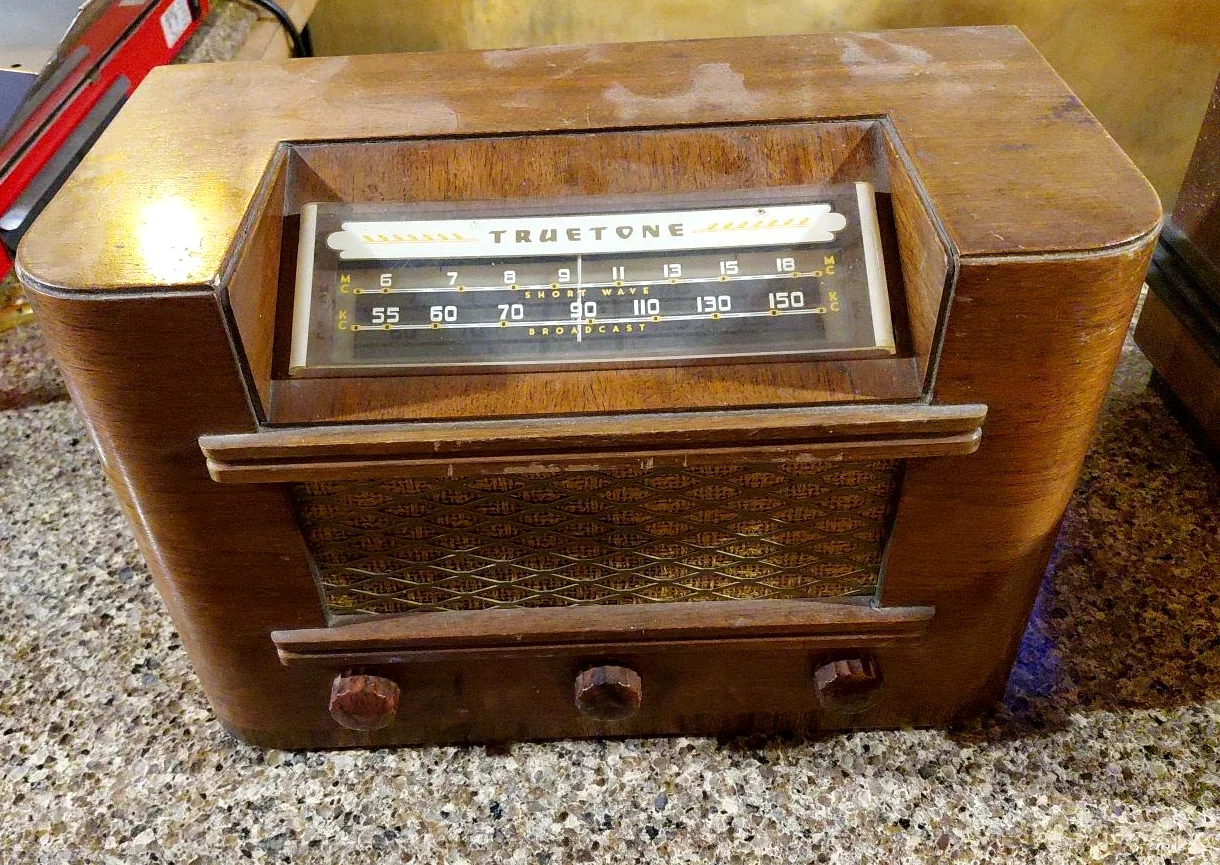
Before television became the center of the American living room, there was the radio.
Families gathered around radios like this one for music, comedy, sports, serialized dramas, weather reports and the evening news. A familiar voice coming through the speaker could entertain an entire household—or bring news from hundreds or thousands of miles away.
Today, information reaches us almost instantly and from countless directions. For an earlier generation, this relatively simple wooden cabinet served a much larger purpose.
It was how the outside world entered the home.
Most Nights, It Entertained.
Some Nights, It Changed Everything.
Imagine a family gathered around a radio like this one in December 1941. There was no television news, no internet, and no smartphone carrying an alert in your pocket.
News of the attack on Pearl Harbor reached Americans through radio reports and rapidly spreading bulletins. The following day, families across the country could listen as President Franklin D. Roosevelt addressed Congress and the nation.
The importance of this radio is not simply tied to that one event. It is what the moment reveals about the role radio played in everyday life.
The same set that brought music, comedy, sports, weather, news and drama into the home could suddenly become the household’s most immediate connection to events of enormous consequence.
For a generation before television, history often arrived by voice.
Hear History
President Franklin D. Roosevelt’s address to Congress was broadcast to the nation the day after the attack on Pearl Harbor.
This brief recording offers a glimpse of the kind of historic moment Americans once experienced through household radios like this one.
Listen to a brief excerpt from President Franklin D. Roosevelt’s December 8, 1941 address to Congress.
For Americans listening at home, moments like this demonstrate why the household radio was so important. News of national significance could enter the living room through the same speaker that normally carried music, comedy, sports and entertainment.
Historical audio: President Franklin D. Roosevelt, December 8, 1941 address to Congress. Public-domain U.S. government recording.
Long Before Television, the Radio Was the Entertainment Center.
Most nights were not historic. They were simply ordinary evenings spent listening together.
Music
Big bands, popular singers, orchestras and live performances could be heard without ever leaving home.
Comedy
Comedy programs brought familiar performers and recurring characters into homes week after week.
Drama & Adventure
Mysteries, westerns, adventures and serialized stories relied on voices, music and sound effects to create entire worlds in the listener’s imagination.
Sports
Play-by-play announcers allowed listeners to follow games taking place far beyond their own community.
News
National and world events arrived through announcers, correspondents and regularly scheduled news reports.
Weather & Information
Weather reports, public announcements and practical information made radio part of the household’s daily routine.
There was no screen to watch. The pictures were created in the listener’s imagination.
A family might laugh together at a comedy program, follow a baseball game, listen to a favorite singer, or wait until the next episode of a continuing story.
In many homes, turning on the radio was simply part of the evening.
It was entertainment, information and companionship, all coming from the same speaker.
A TruTone Radio from the Age Before Television
The exact model number of this radio has not survived, but the set itself still tells us quite a bit.
TruTone was the house brand used by Western Auto Supply Company for radios and other home electronics.
The wooden cabinet, vacuum-tube construction and broadcast / shortwave dial place the set in the late 1930s to early 1940s era.
The tuning dial includes both standard broadcast frequencies and shortwave bands, allowing listeners to tune beyond ordinary local radio stations.
No surviving model label or chassis identification has been found, so the radio is cataloged conservatively rather than assigning an uncertain model number.
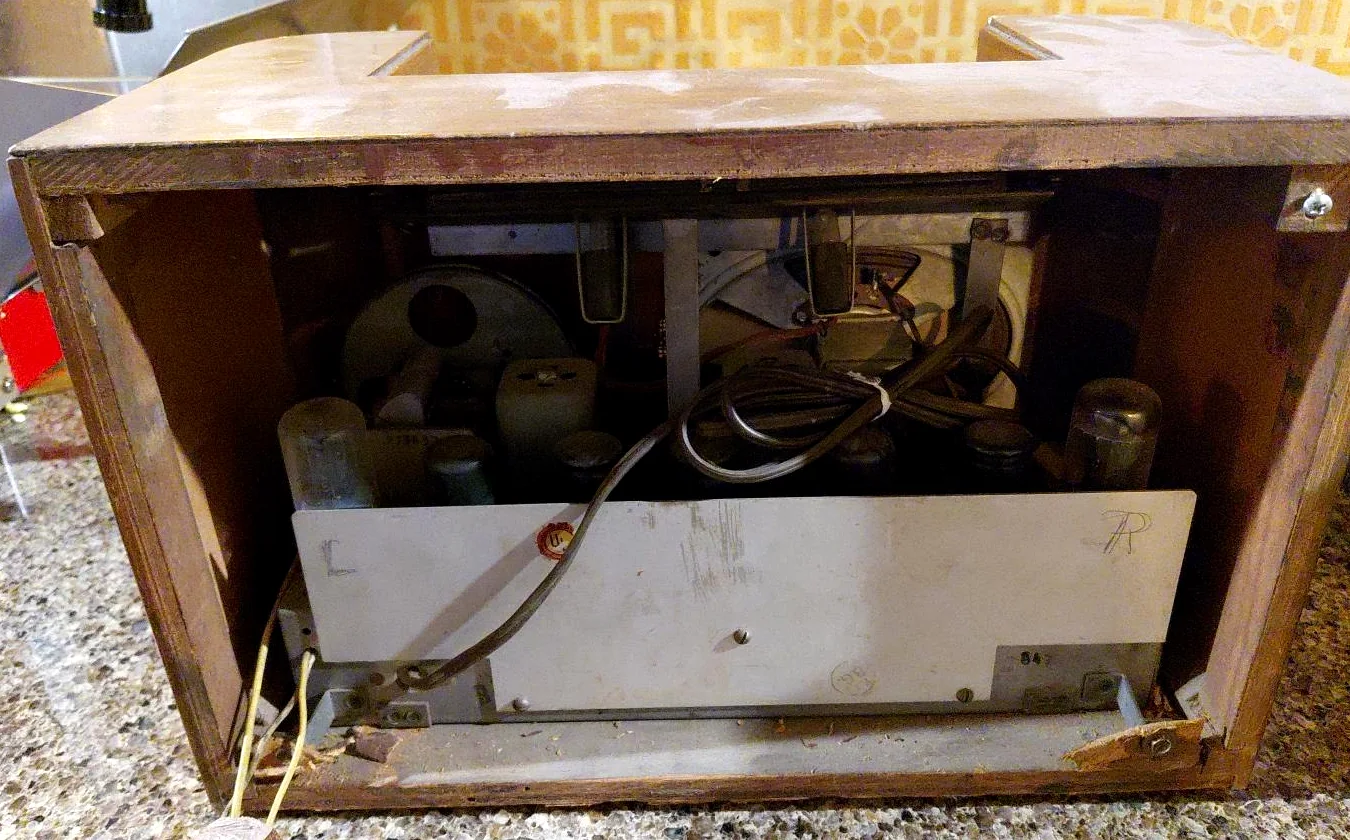
Before Transistors, Radios Ran on Vacuum Tubes
Looking through the rear of the cabinet reveals the radio’s speaker, metal chassis, wiring and vacuum tubes.
These tubes performed the electronic work later handled by much smaller transistors and integrated circuits. They required time to warm up and generated heat while the radio was operating.
The result was a machine that was much larger and heavier than the portable radios that would become common in later decades.
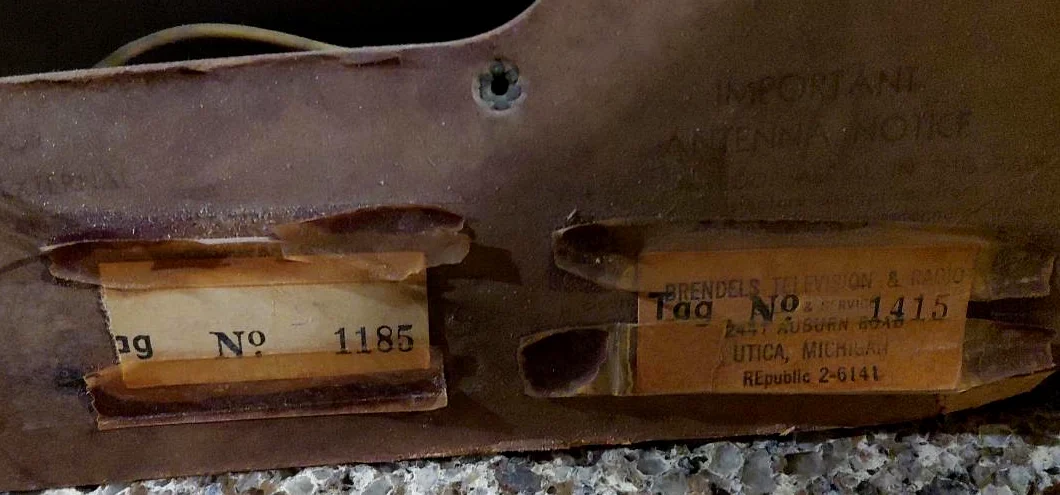
Service Tags Survive Inside the Cabinet
Paper repair and service tags remain attached inside the radio, offering a small glimpse into the life of this particular set after it left the store.
One surviving tag identifies Brendel’s Television & Radio in Utica, Michigan, evidence that the radio was serviced and maintained rather than simply discarded when it developed a problem.
Details like these help transform an old appliance into an artifact with a history of its own.
We may not know the exact model number or the name of the family that once owned it.
But we can still understand the role a radio like this played in the home—and why people kept it working.
What Did an Evening Around the Radio Sound Like?
The radio itself may be silent today, but many of the programs once heard through sets like this one still survive.
Explore Old-Time Radio
Comedy, mystery, adventure, music, news and serialized dramas once filled the airwaves each evening.
Old Radio World preserves a large collection of historic radio recordings that can help recreate the experience of listening during the years before television became commonplace.
Choose a program, close your eyes for a moment, and imagine the voices coming through the speaker of this TruTone radio.
Explore Old Radio WorldOpens an independent external website in a new window.
Listening was different from watching television. There were no pictures supplied for you.
A creaking door, approaching footsteps, an announcer’s voice, an orchestra or the crack of a baseball bat could create an entire scene through sound alone.
The radio supplied the sound.
The listener supplied the pictures.
Hear the Story of the Radio
Take a moment to hear how a radio like this fit into everyday life before television became a fixture in American homes.
When the World Came Through the Radio
This short audio interpretation explores what a household radio meant to the people who gathered around it for entertainment, information and news from beyond their own community.
Approximate listening time: 1½ minutes
The radio on display is silent now.
But in its own time, a cabinet like this could fill a room with music, laughter, ballgames, breaking news and voices from places its listeners might never visit.
The object survives.
The sounds help us understand what it meant.
The World Was Listening.
We do not know every program that once played through this particular radio, or every person who sat nearby and listened.
But its purpose would have been immediately familiar to millions of American households.
It carried ordinary evenings filled with music, comedy, sports and stories. It delivered news from places far beyond the listener’s own community. And occasionally, it carried words that people would remember for the rest of their lives.
Before the world appeared on a screen, it came through the radio.
Discover More of the Tahqua Theater Collection
Explore more objects, artwork and technology preserved at Tahqua Theater and discover the stories behind them.
Return to The Collection