
The Collection • Projection & Presentation
Coming Attractions
When Trailers Arrived on Film
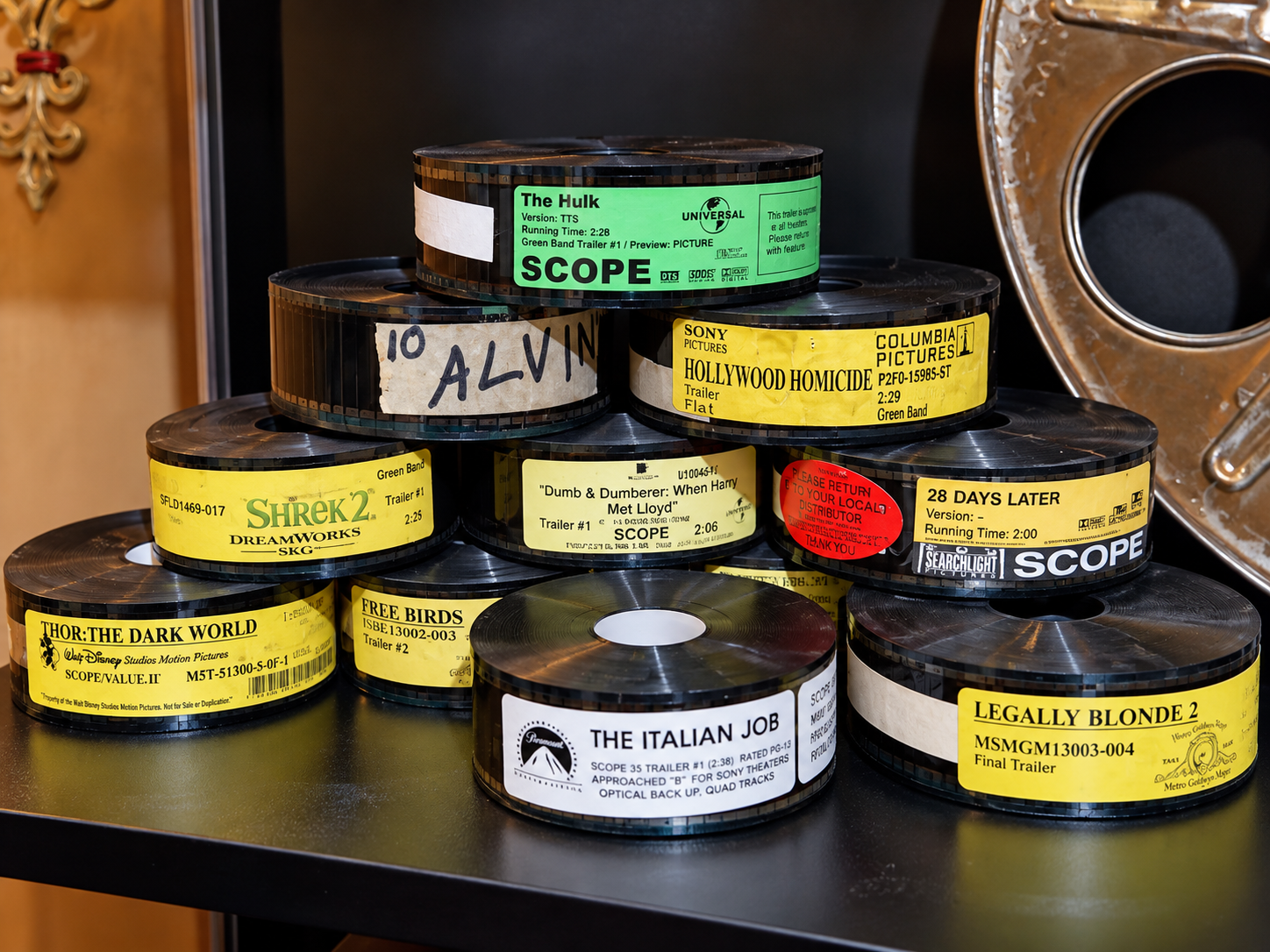
Long before movie previews arrived as digital files, every trailer was a physical piece of film. These surviving 35mm reels offer a glimpse into an era when even the coming attractions had to be received, handled and prepared by the projectionist.
From the Projection Booth
Hear the History
Audio Story • Coming Attractions
When a Preview Was a Piece of Film
Join Alistair for a short look back at the days when movie trailers arrived on 35mm film and preparing the coming attractions was part of the projectionist’s work.
Read the transcript
You know the trailers you watch before a movie?
Today, they arrive at a theater as digital files. But not very long ago, a movie trailer was an actual piece of 35-millimeter film.
What you’re looking at here are real theatrical trailers preserved in the Tahqua Land Theatre collection. You’ll probably recognize a few of the names: The Hulk, The Italian Job, Legally Blonde 2, 28 Days Later, and others.
Each of these little reels contained only a few minutes of film. A projectionist would select the trailers being shown, inspect them, and incorporate them into the evening’s presentation.
And that meant the familiar previews before the movie weren’t simply a playlist someone selected on a computer.
They were physical film moving through the projector, just like the feature itself.
When a trailer was no longer needed, it could be removed, rewound and returned, stored, or occasionally simply left behind.
That’s why some of them are still here.
At first glance, they may not seem like much — just a small pile of old film reels.
But look a little closer.
Their labels, markings, and handwritten notes preserve a world in which even a few minutes of coming attractions had to be shipped, inspected, handled, and prepared by the people working behind the screen.
They’re small artifacts, but they tell a much larger story about how going to the movies used to work.
Before Digital Cinema
A Trailer Was a Physical Object
Today, adding a preview to a movie program can be a digital decision. In the 35mm era, every trailer was another piece of film that had to make its way to the theater, through the projection booth, and eventually somewhere else.
It Arrived
Trailers were distributed to theaters as short lengths of 35mm film, usually wound onto small reels. Labels identified the title, version, running time, format and other information needed by theater staff.
It Joined the Show
The projectionist inspected the trailer and incorporated it into the film program. Several trailers might precede the feature, turning a collection of separate pieces of film into the presentation the audience experienced.
It Came Back Out
When a trailer was no longer part of the program, it could be removed and rewound. Depending on the circumstances, it might be returned to the distributor, retained for a time, reused, or simply remain behind.
That physical process made the projection booth very different from the digital workflow used today. Changing the preshow meant working with actual film: handling reels, identifying the correct material, inspecting it and preparing it for projection.
Even a trailer lasting only two or three minutes had its own reel, labels and handling instructions. Look closely at the surviving examples in the Tahqua Land Theatre collection and those details are still visible. Distributor names, running times, aspect ratios, soundtrack information and handwritten notes remain attached to the film decades later.
The audience saw a few minutes of coming attractions. The projectionist saw another physical piece of the evening’s show that had to be handled correctly.
Behind the Coming Attractions
Who Chose the Trailers?
To the audience, the previews simply appeared before the movie. Behind the scenes, deciding what appeared on the screen could involve both the theater and the film distributor.
The Theater’s Choices
Matching the Preview to the Audience
Theaters could receive a variety of trailers for upcoming releases. When the theater had discretion over what to include, management and projection staff could choose previews appropriate for the feature and its expected audience.
That made the trailer program part promotion and part programming: a chance to show moviegoers what they might want to return and see next.
The Distributor’s Choices
Sometimes the Studio Had a Say
Not every trailer was simply an optional selection. Distributors could designate particular trailers to accompany a feature, and exhibition arrangements could include requirements or instructions about promotional material.
For theater staff, that meant the coming attractions could include both trailers chosen locally and trailers associated with the feature by its distributor.
Trailer
An attached trailer was a trailer supplied by the studio or distributor in association with a particular feature. Depending on the release and exhibition arrangement, one or more such trailers could accompany the feature.
The term survived into the digital era even after trailers stopped arriving as little reels of 35mm film.
So the trailers before a movie were not always just a projectionist’s favorites. They were part of the larger relationship between the theater, the distributor and the films each was trying to put before an audience.
More Than Coming Attractions
Before the Feature
What audiences watched before the movie has changed along with the world outside the theater.
Today’s moviegoer expects trailers before the feature. Go farther back in cinema history, however, and the material shown before the main attraction could serve another purpose entirely.
The Newsreel Era
The Theater Could Bring You the World
Before television brought moving news pictures into American homes, movie theaters were an important place to see filmed reports of events beyond the local community. Newsreels brought audiences images of wars, elections, sporting events, public ceremonies, disasters and other events of the day.
A Changing Media World
News Moved Into the Home
Television transformed that relationship. Moving images of current events no longer required a trip to the theater. As television news became part of everyday life, the theatrical newsreel gradually disappeared and the role of the material preceding the feature continued to evolve.
Coming Attractions
The Preview Became a Familiar Ritual
Theatrical trailers became one of the most familiar parts of the moviegoing experience. In the 35mm era, each preview was still a physical piece of film that had to be received, handled and incorporated into the presentation.
The Digital Preshow
The Film Disappeared. The Preshow Didn’t.
Digital cinema replaced reels and splices with electronic playlists. Trailers could be joined by theater announcements, promotional material and paid advertising. That screen time also became a source of revenue for exhibitors, helping make the minutes before the feature commercially valuable in their own right.
The Moviegoer Adapts
“How Late Can We Get There?”
Modern audiences have learned that the advertised showtime does not always mean the feature begins at that exact minute. Some moviegoers deliberately arrive after the posted time, hoping to skip advertisements and at least some of the trailers.
Discussions among moviegoers even compare theaters and ask how long the preshow usually lasts — an attempt to arrive late enough to miss the advertising, but not so late that they miss the beginning of the movie.
The projectionist no longer has to splice the preshow together — but audiences still plan around it.
Reading the Artifact
Look Closely
At first they look like little more than a stack of old film. But the labels, markings and handwriting preserved on these reels tell us how theatrical trailers moved through the working world of a projection booth.
Running Time
A trailer might last only two or three minutes, but those minutes mattered when assembling the complete program shown before the feature.
Picture Format
Labels such as Scope helped identify how the image was intended to be projected and alerted the booth to the format of the material on the reel.
Sound Information
Logos and technical markings could identify soundtrack formats and other information needed to present the trailer correctly.
Studio & Distributor
Names such as Universal, Columbia, MGM, DreamWorks and others identify the companies behind the films and the distribution system that brought their promotional material into theaters.
Handwritten Notes
Not everything in a projection booth came from a printer. Handwriting, temporary labels and other working marks are evidence that these reels were objects people had to identify, organize and handle.
Return Instructions
Some labels include instructions concerning the handling or return of the trailer — a reminder that these little reels were part of a larger distribution network, not simply souvenirs.
The artifact is the evidence. A running time, a studio logo, a handwritten note or an instruction to return the reel may seem ordinary. Together, those details preserve the everyday work behind an evening at the movies.
The Collection
Continue Through the Projection Booth
A trailer was only one small part of presenting a motion picture. Explore more of the equipment and processes that once turned reels of film into an evening at the movies.
Film Handling
SPECO LP-271 Film Table
Before film reached the projector — and after the show was over — it had to be prepared and handled. Explore the table used for film setup, breakdown, splicing and other projection-booth work.
Explore This Exhibit →Film Handling
The Take-Up Reel
Film entering a projector had to go somewhere when it came out. The take-up system collected the film as the show progressed and was an essential part of keeping the presentation moving.
Exhibit Coming SoonProjection
From Film to the Screen
Follow the path through the projector itself — where a strip of film, a powerful light source and precisely timed machinery transformed individual frames into moving pictures on the screen.
More From the CollectionThe equipment may be silent now, but together these surviving pieces preserve the work that once happened behind the screen.