
Film Handling • Projection Booth
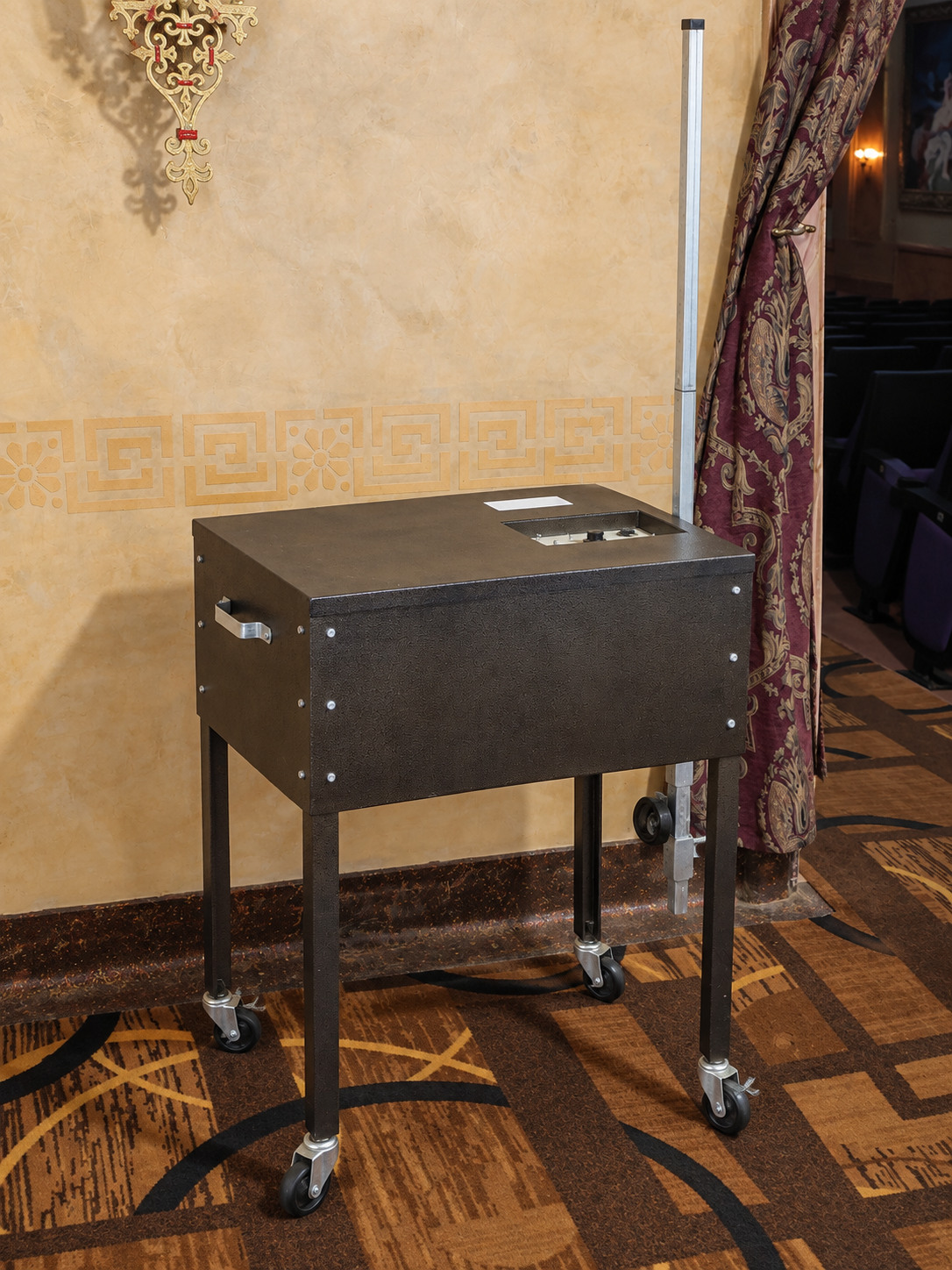
SPECO Model LP-271 Film Setup & Breakdown Table
Before a 35mm feature reached the screen, the film had to be prepared, handled, spliced, and later broken back down. This SPECO LP-271 was part of that behind-the-scenes projection-booth workflow.
Behind the Screen
Preparing Film Before the Projector Ever Ran
Film presentation involved more than loading a projector. A feature had to be prepared for use in the booth, and that work included handling the film, joining sections when necessary, and organizing the print for presentation.
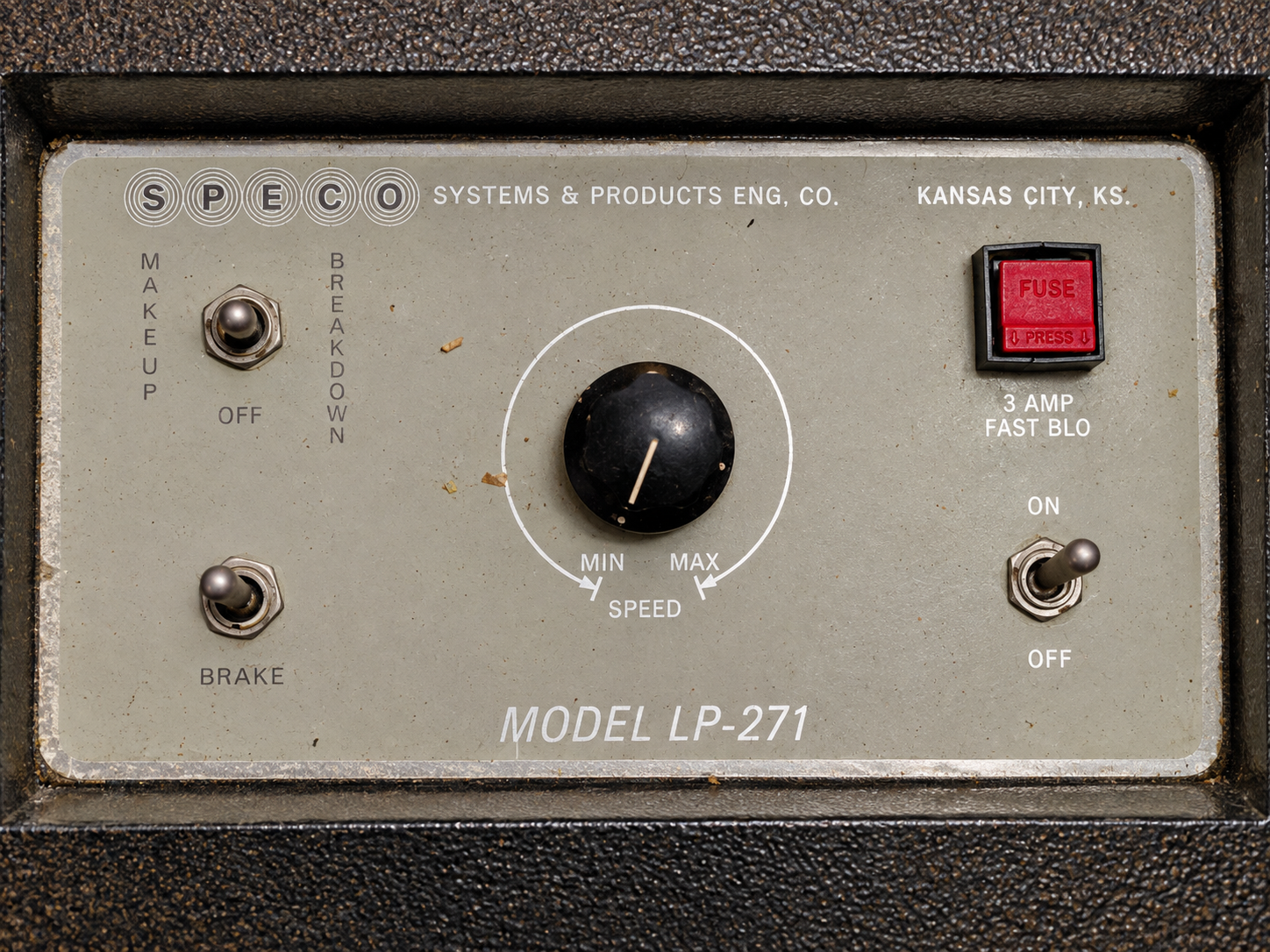
The LP-271 provided a dedicated working station for that process. Its controls are labeled for MAKE UP and BREAKDOWN, directly documenting the two directions of the workflow.
After a film’s engagement ended, the process could be reversed so the print could be broken down and prepared for its next destination.
Projection-Booth Workflow
Make Up and Breakdown
The wording on the original control panel tells us exactly how the machine was organized: one direction for preparing film and another for taking it back down.
Make Up
Preparing a Film for Presentation
The table gave projection staff a controlled place to handle film and complete the setup work needed before presentation. Splicing could be performed as part of that preparation when sections needed to be joined.
Breakdown
Reversing the Process
When the engagement was over, the same station could be used in the opposite direction to break the film back down for handling and transport. The control panel includes both a brake and a variable speed control to manage that movement.
Look Closely
The Controls Tell the Story
The LP-271’s surviving control panel is especially useful because it identifies both the manufacturer and the machine’s intended operating modes.
- SPECO — Systems & Products Engineering Co., Kansas City, Kansas
- Model LP-271 — printed directly on the original panel
- MAKE UP / BREAKDOWN — selectable operating direction
- SPEED — variable control marked MIN to MAX
- BRAKE — dedicated brake control
- ON / OFF and a labeled 3-amp fast-blow fuse
Inside the Machine
Motor, Belt, Pulley, and Drive Shaft
Opening the cabinet reveals the working parts hidden beneath the tabletop: an electric motor, belt, pulley, shaft, wiring, and supporting hardware.
Together, those components transferred power to the film-handling mechanism while the operator controlled direction, speed, and braking from the panel above.
The exposed mechanism also shows why equipment like this belonged in the projection booth rather than in the auditorium: preparing film was mechanical, hands-on work performed before and after the public ever saw the finished show.
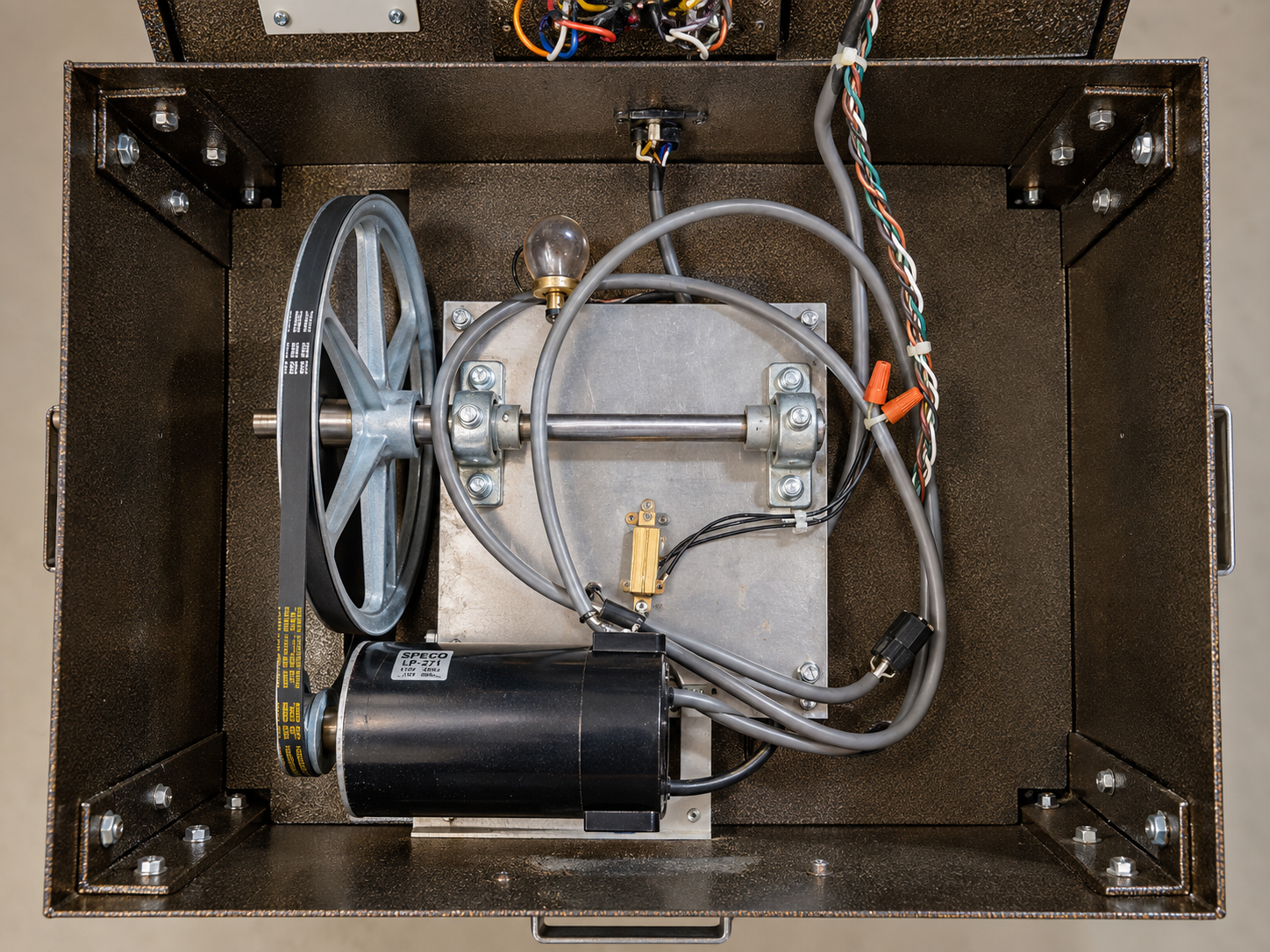
Exhibit Gallery